E-Commerce · Full-Stack · CMS
Wild Hive
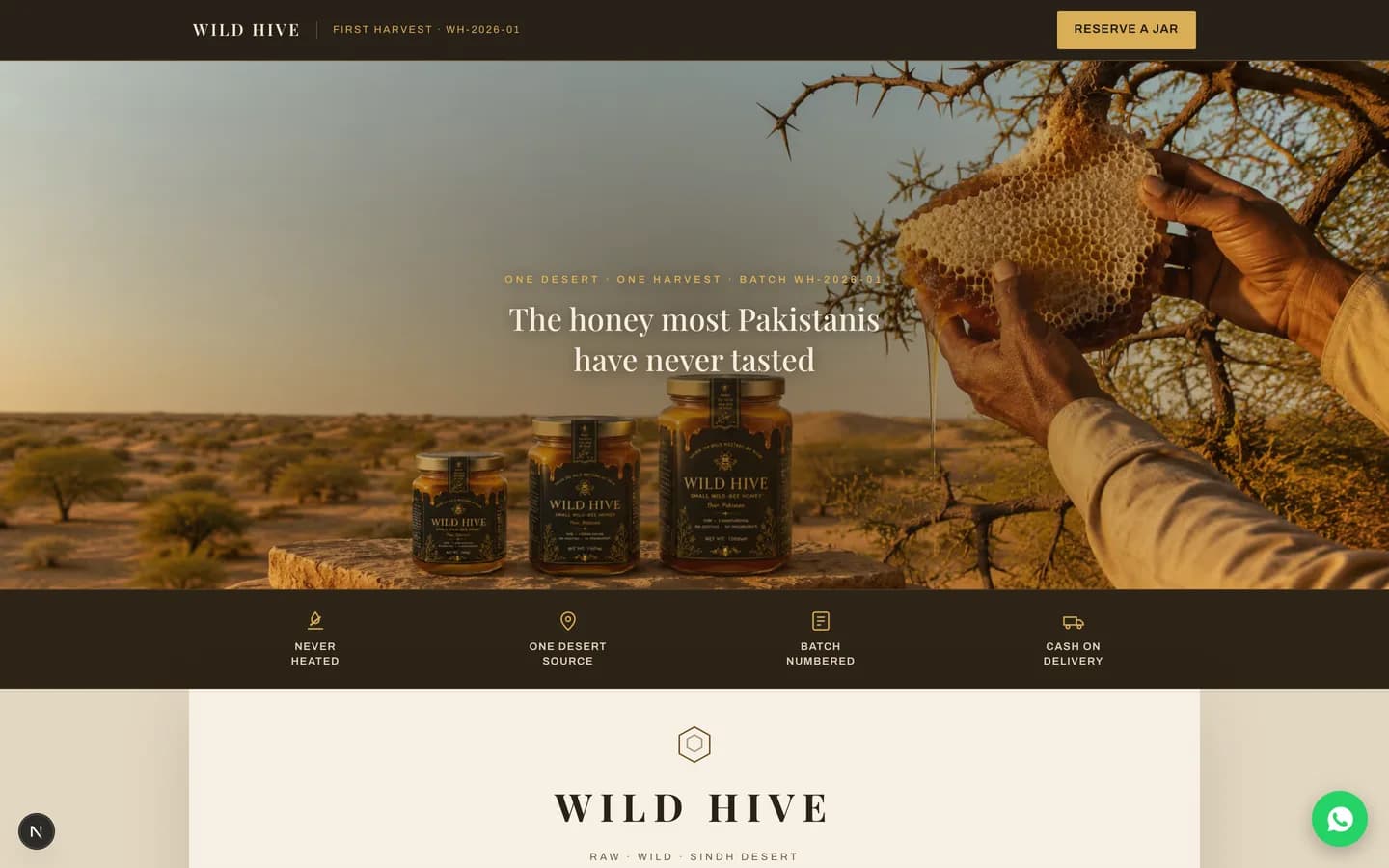
Self-Hosted Shopify Alternative for a COD Brand
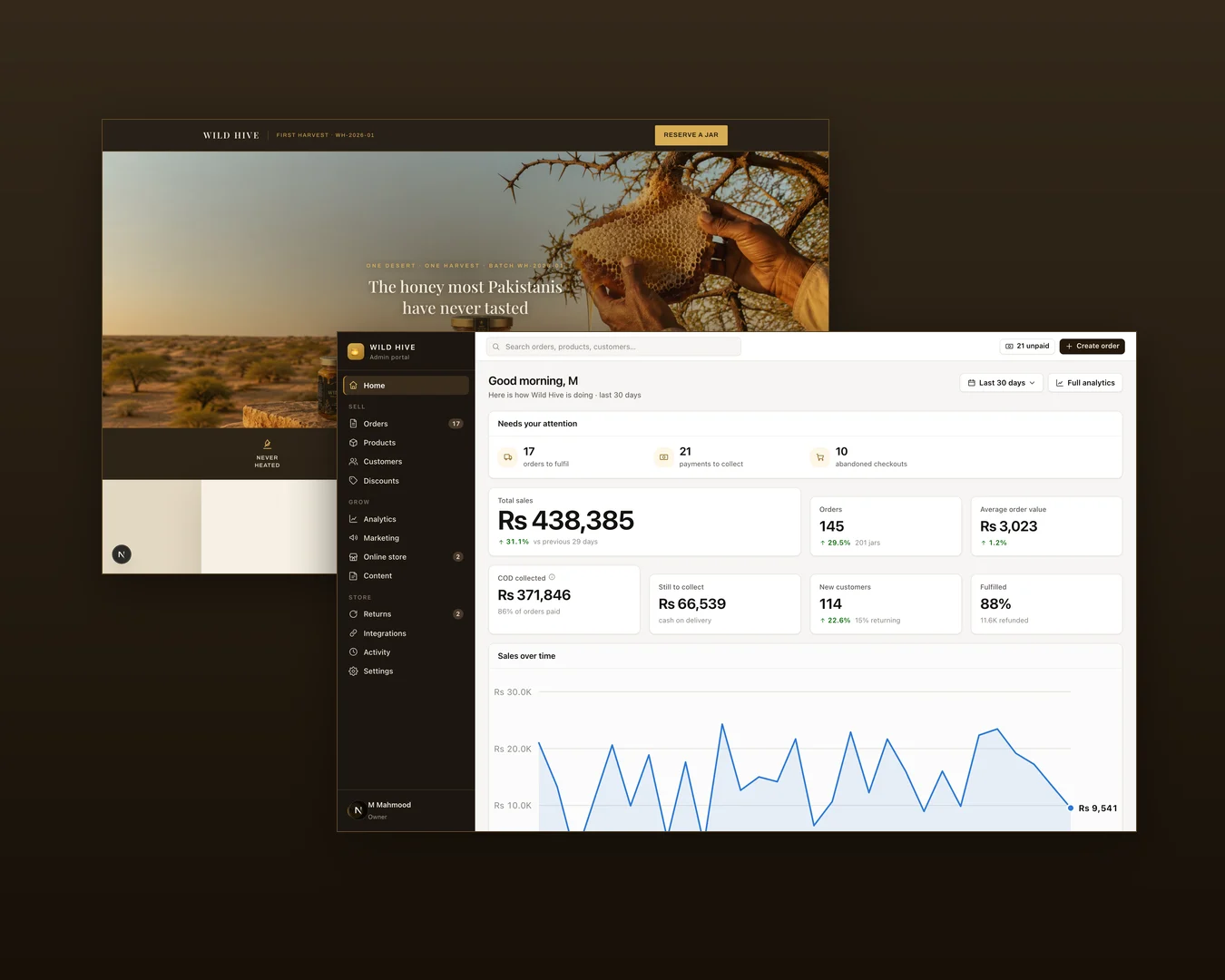
My roleI designed and built the whole stack: storefront, 60-route admin portal, CMS and data model.
The situation
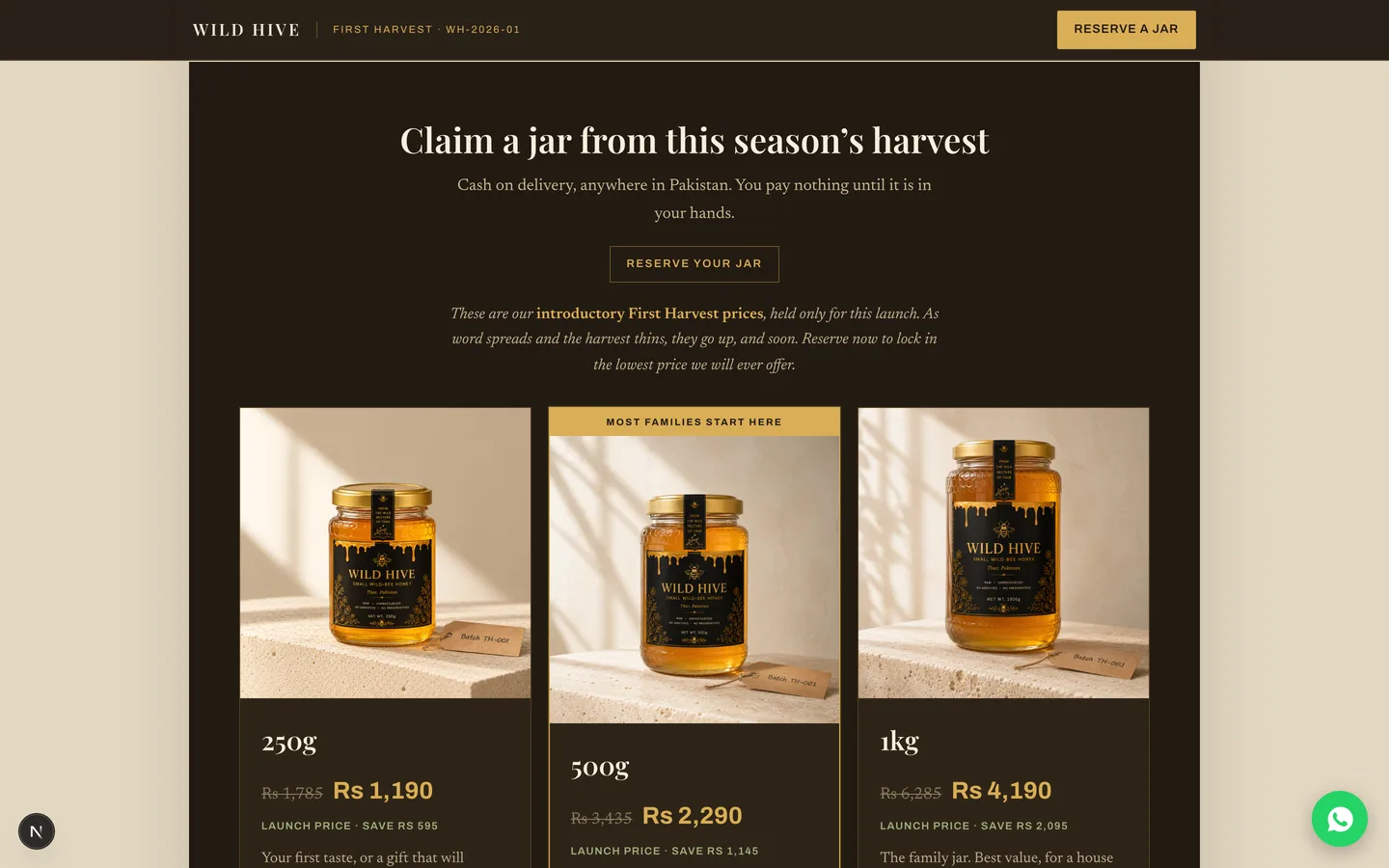
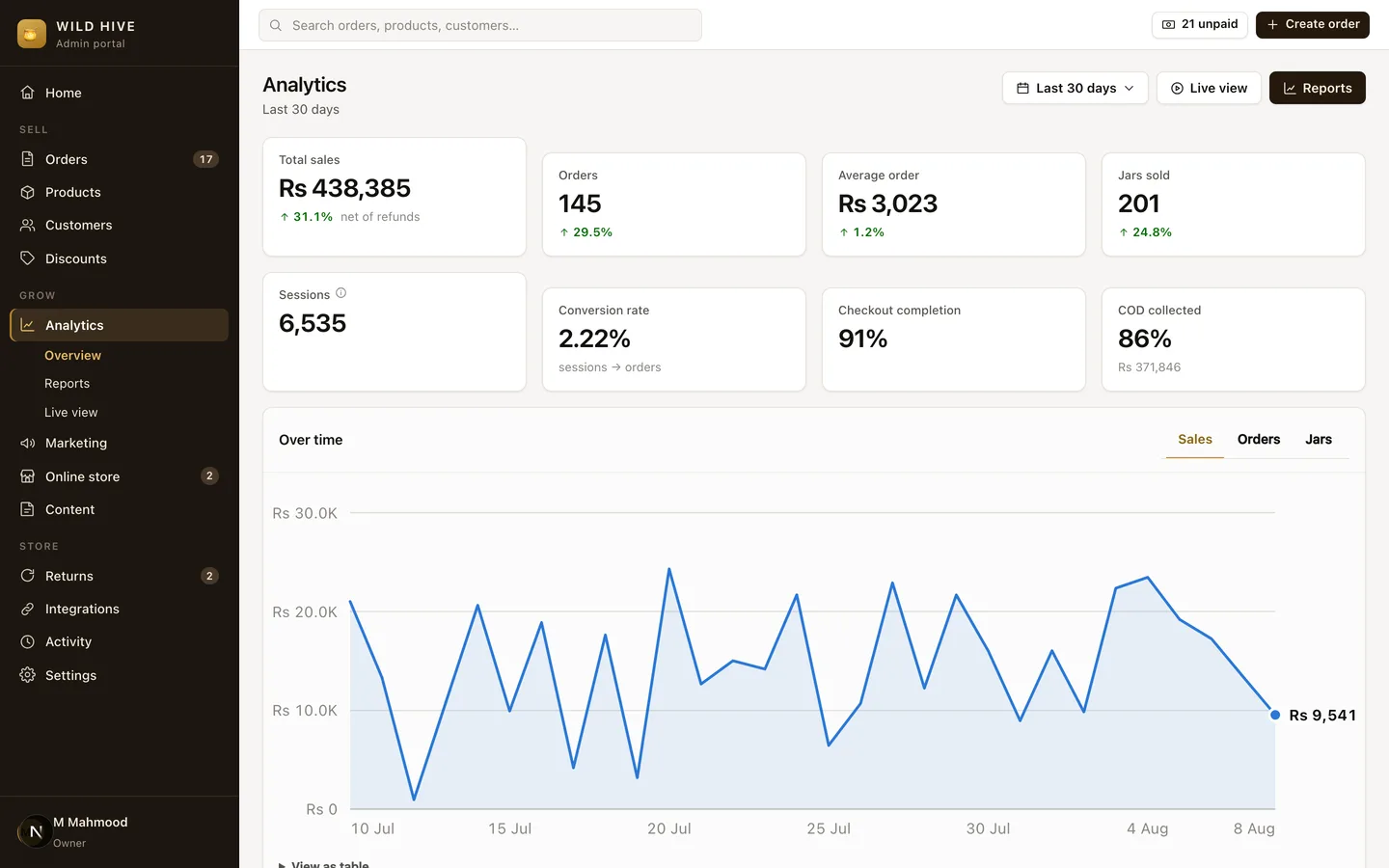
Selling honey in Pakistan means selling cash on delivery: the customer pays the courier at the door. That breaks the assumption every hosted platform is built on, that payment and order happen together.
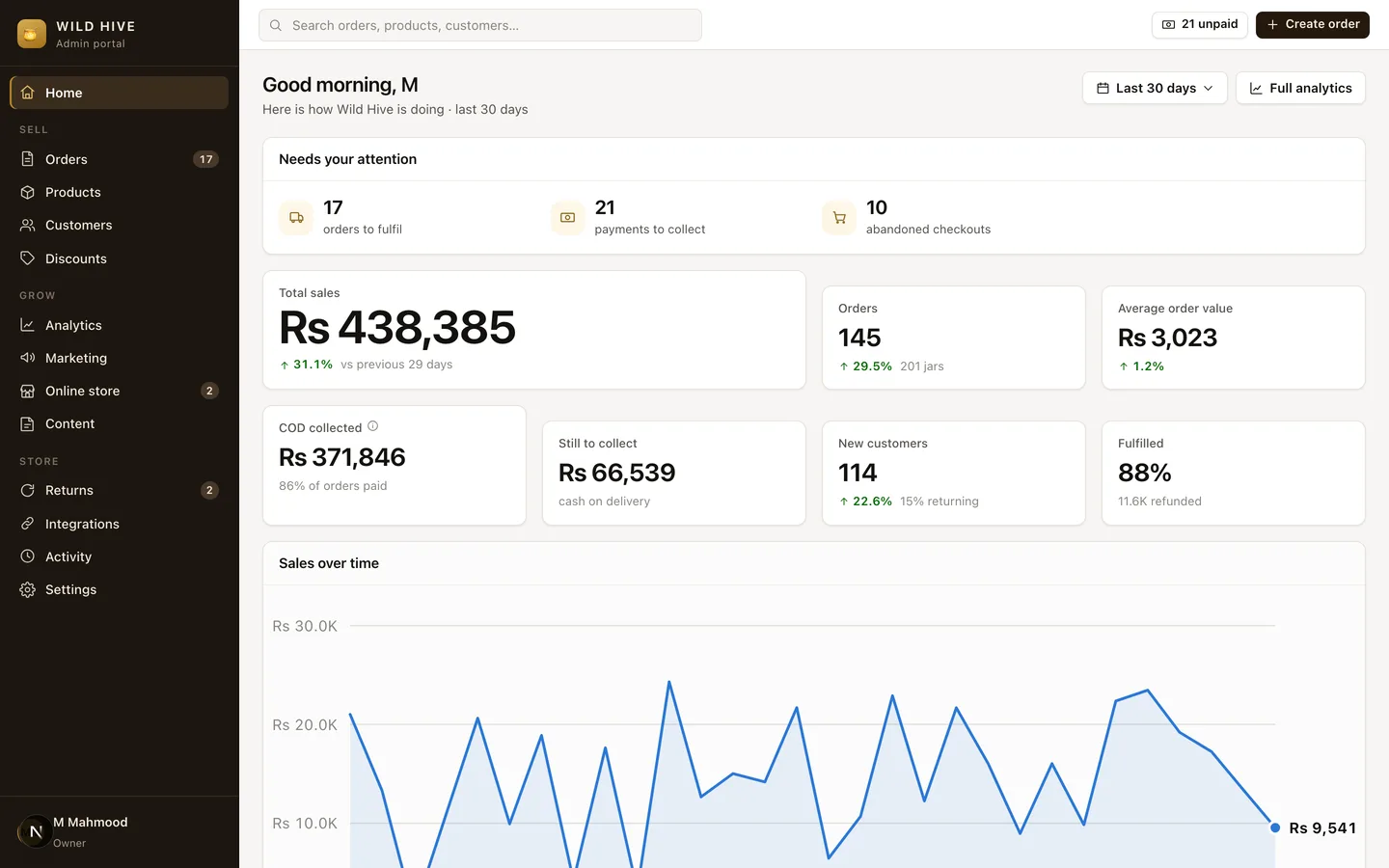
On Shopify, the number that actually matters, how much of what you sold you collected, is not a first-class figure anywhere. And every price change, batch number or testimonial on the sales page meant a developer and a deploy.
- COD-native: fulfilment, cash collection and returns are separate events.
- No monthly platform fee, no transaction cut, no external services to maintain.
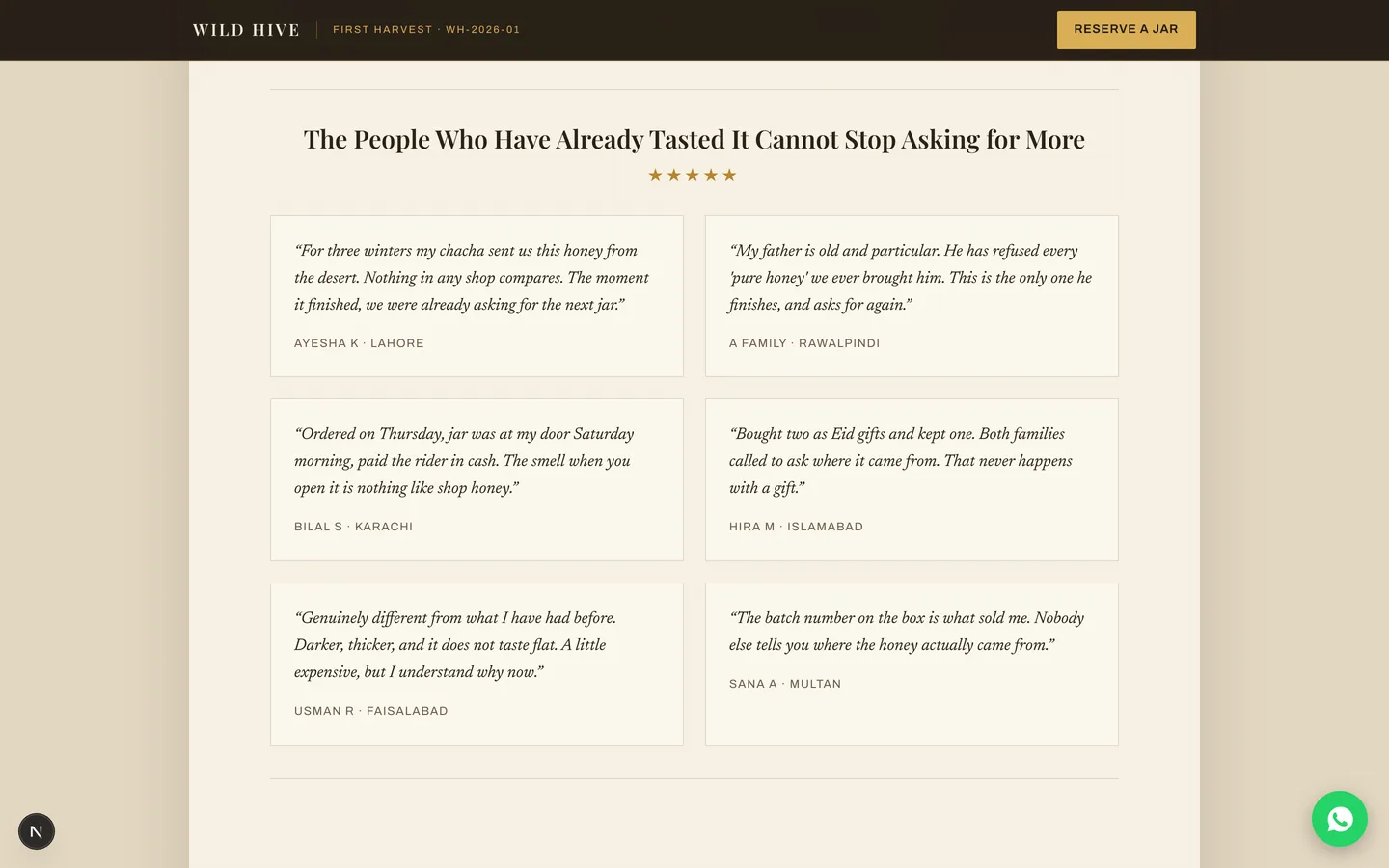
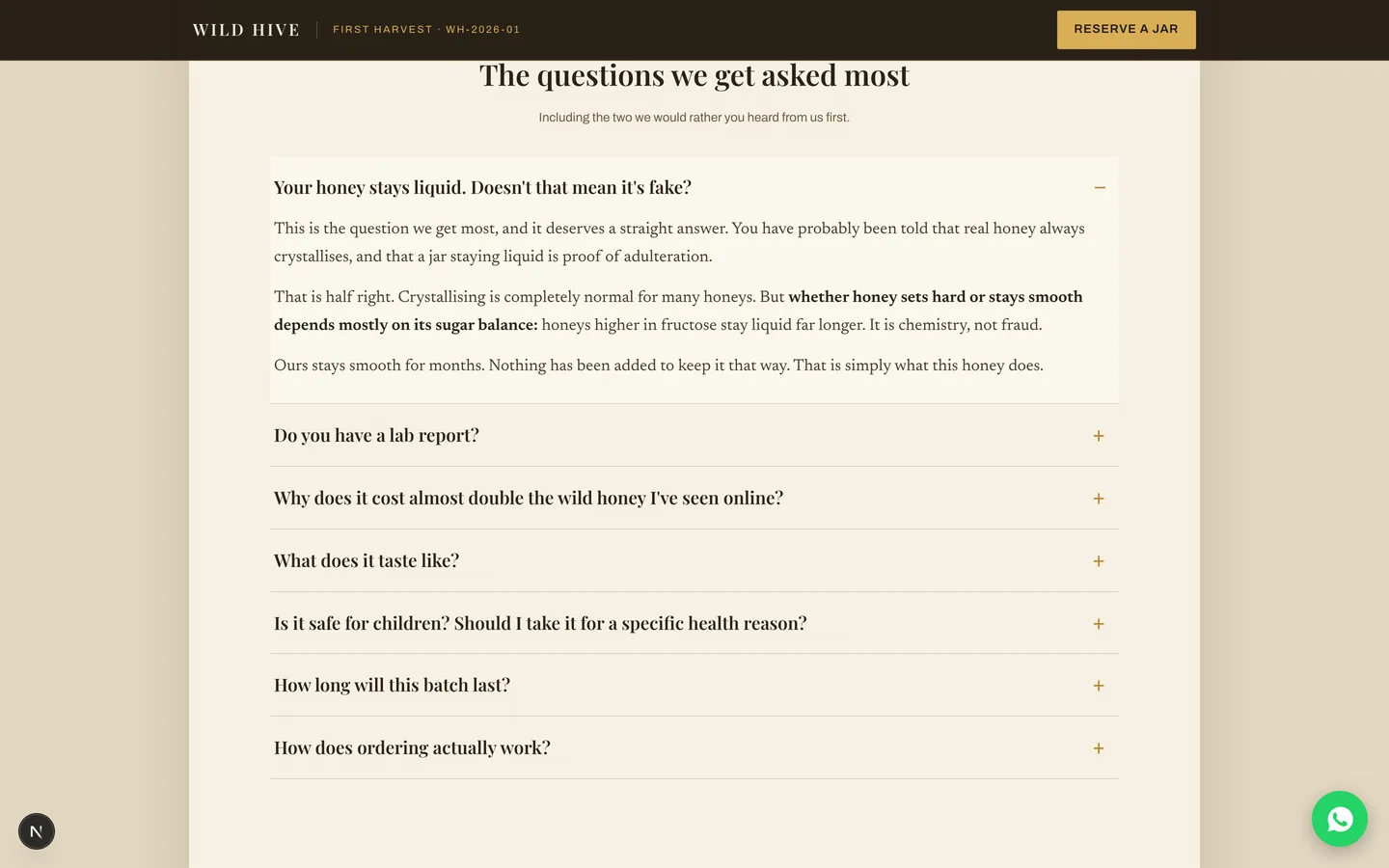
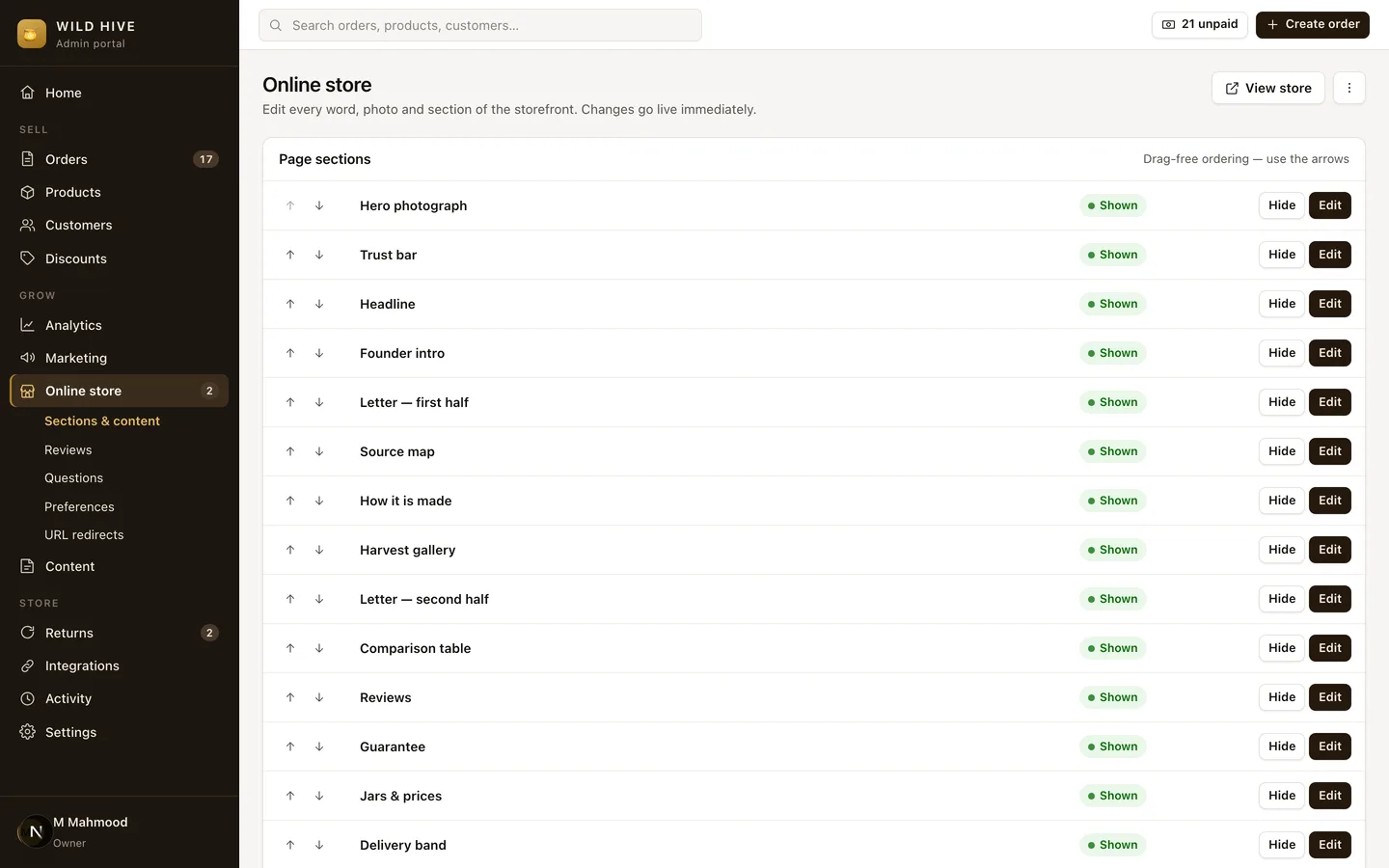
- The owner edits everything; no developer in the loop for copy changes.
System architecture
- Meta ad trafficMeta Pixel
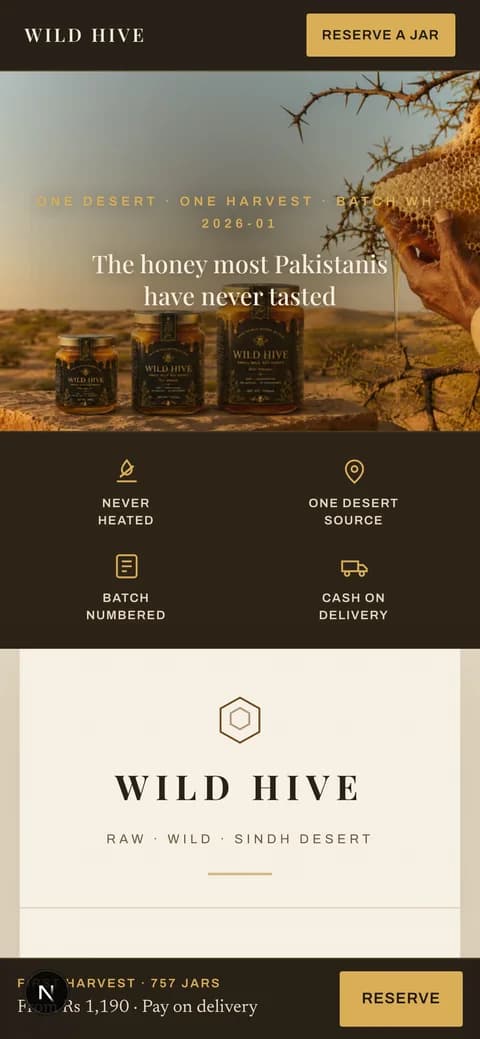
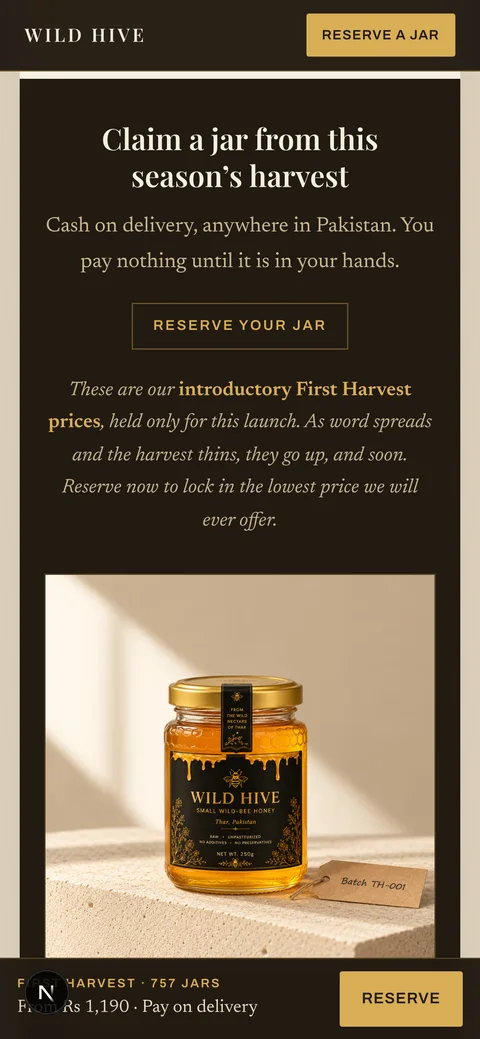
- Editorial storefrontNext.js 15 · RSC
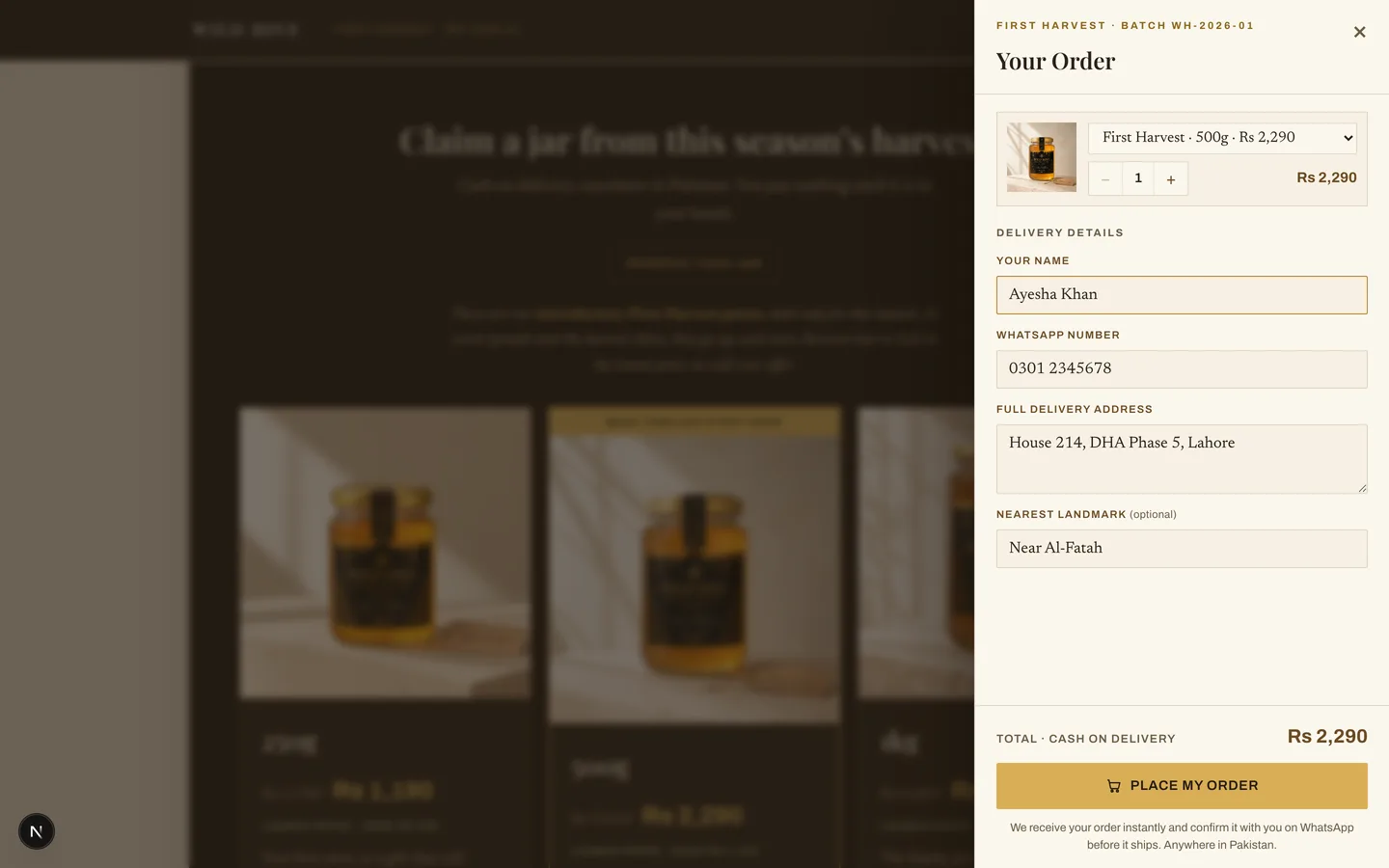
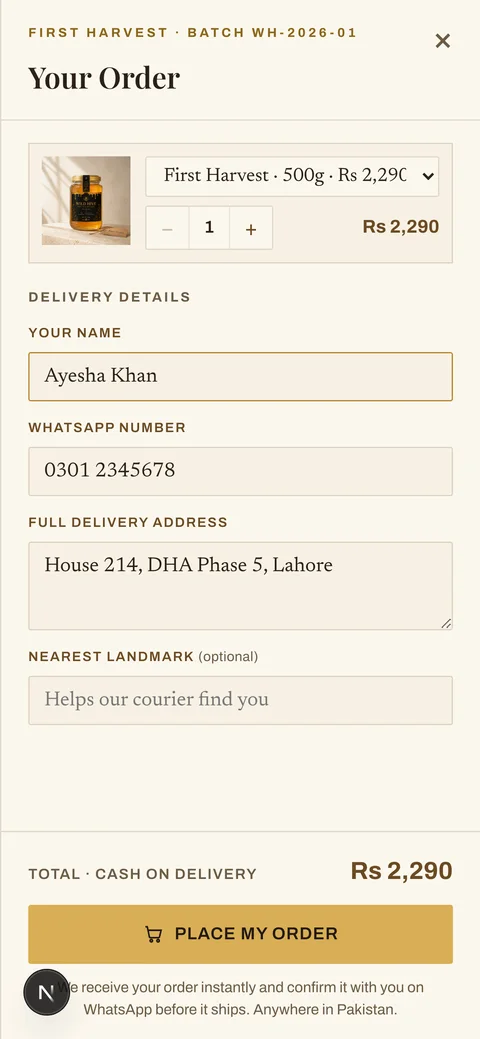
- Order drawerCOD checkout · Server Actions
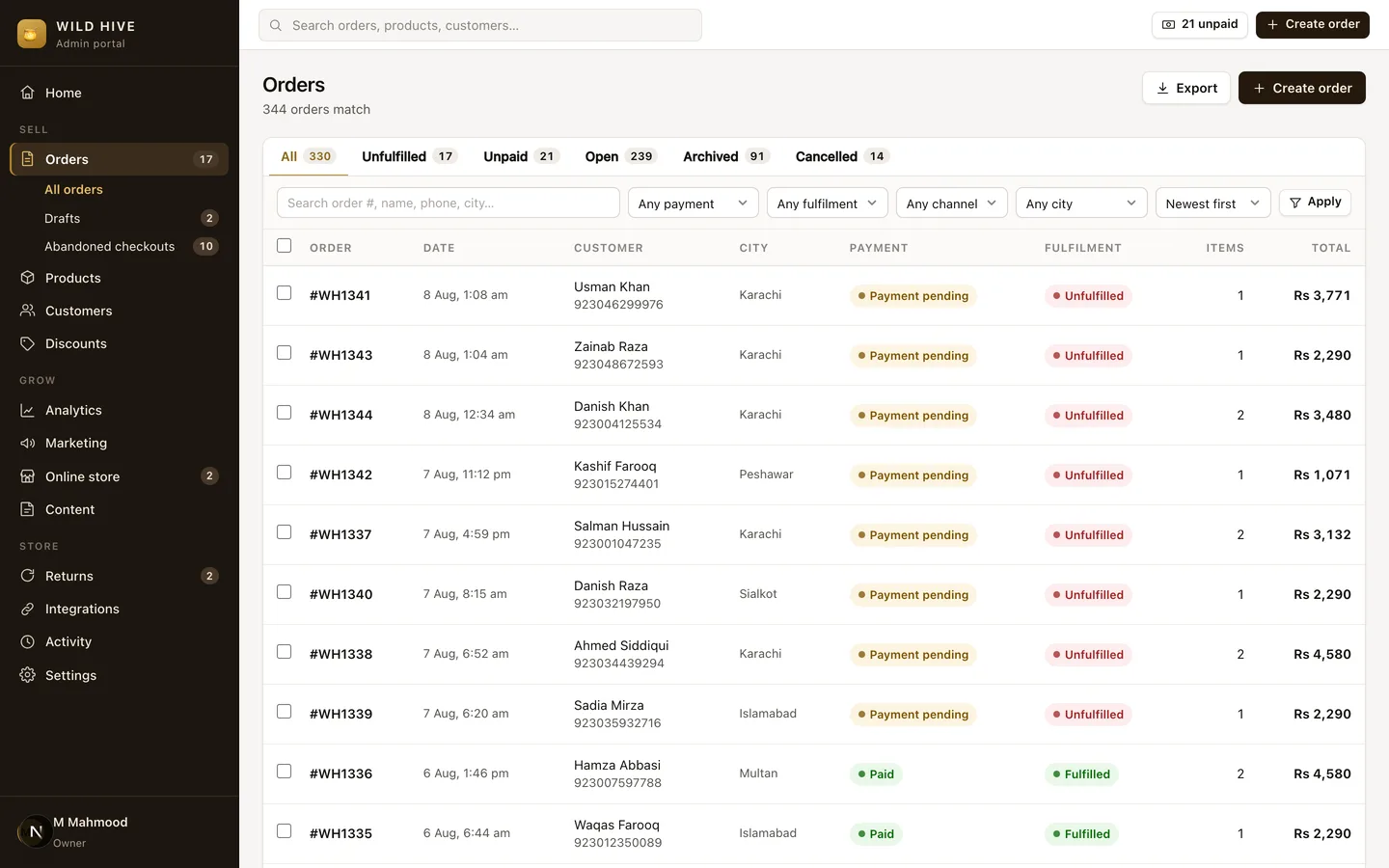
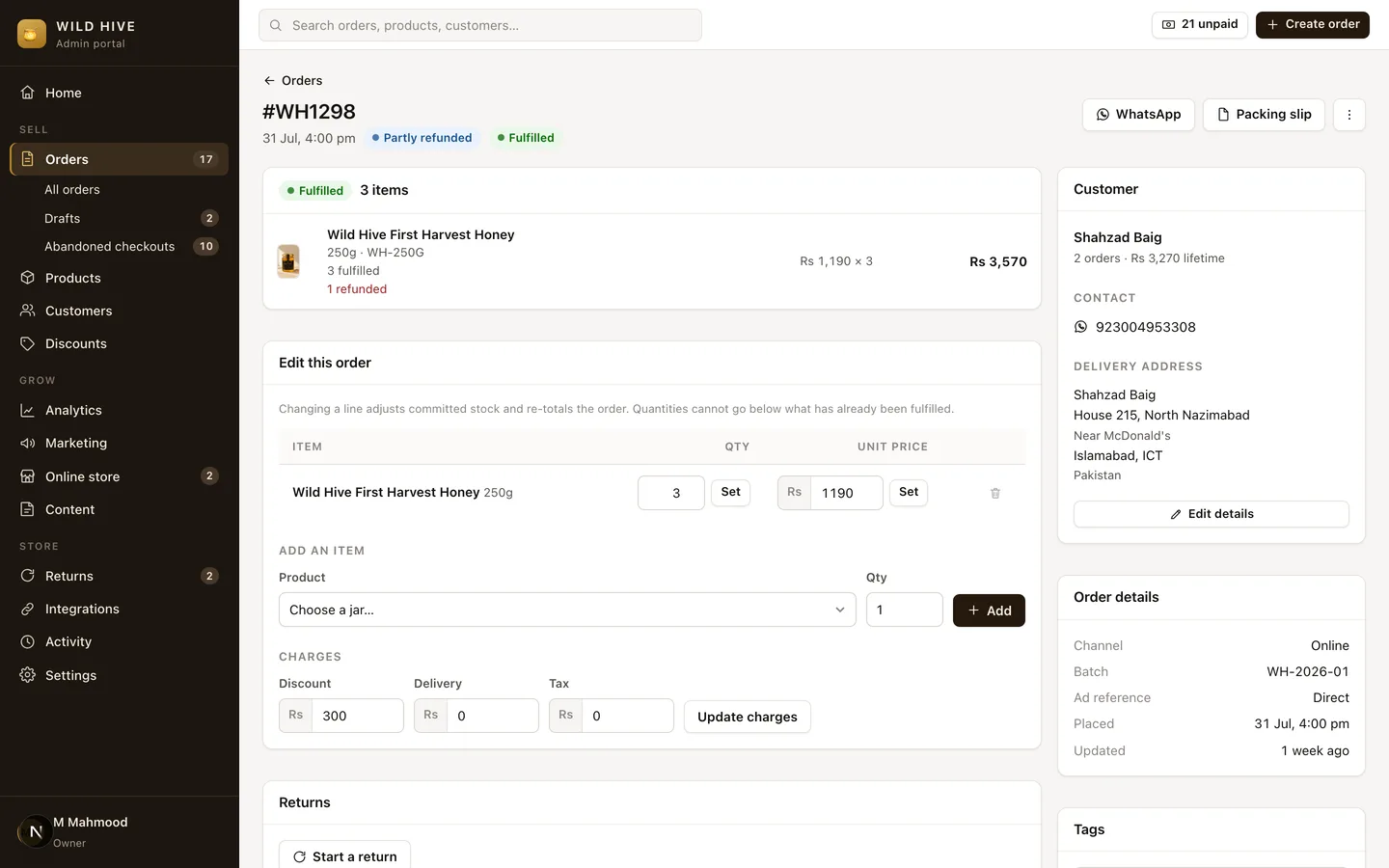
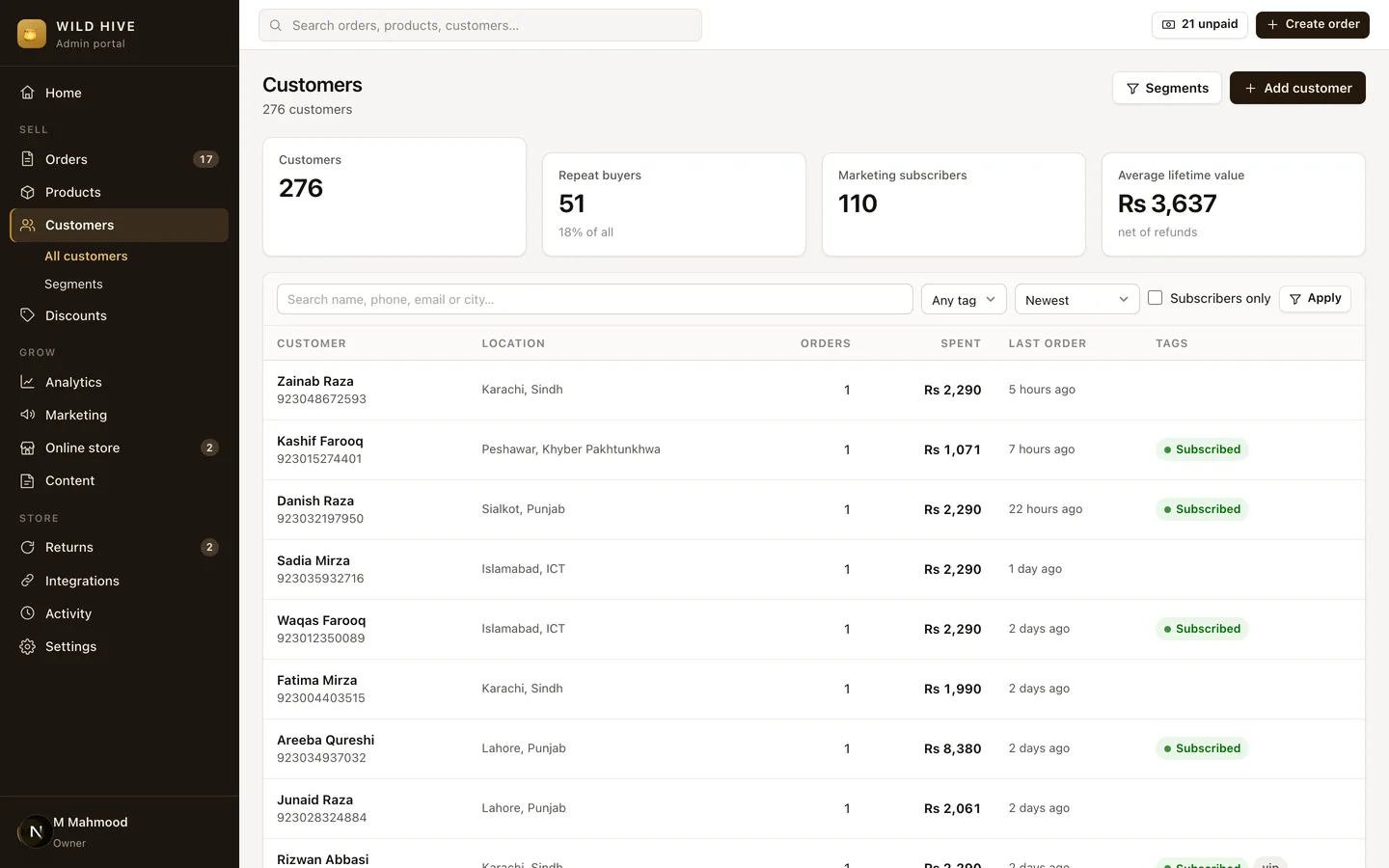
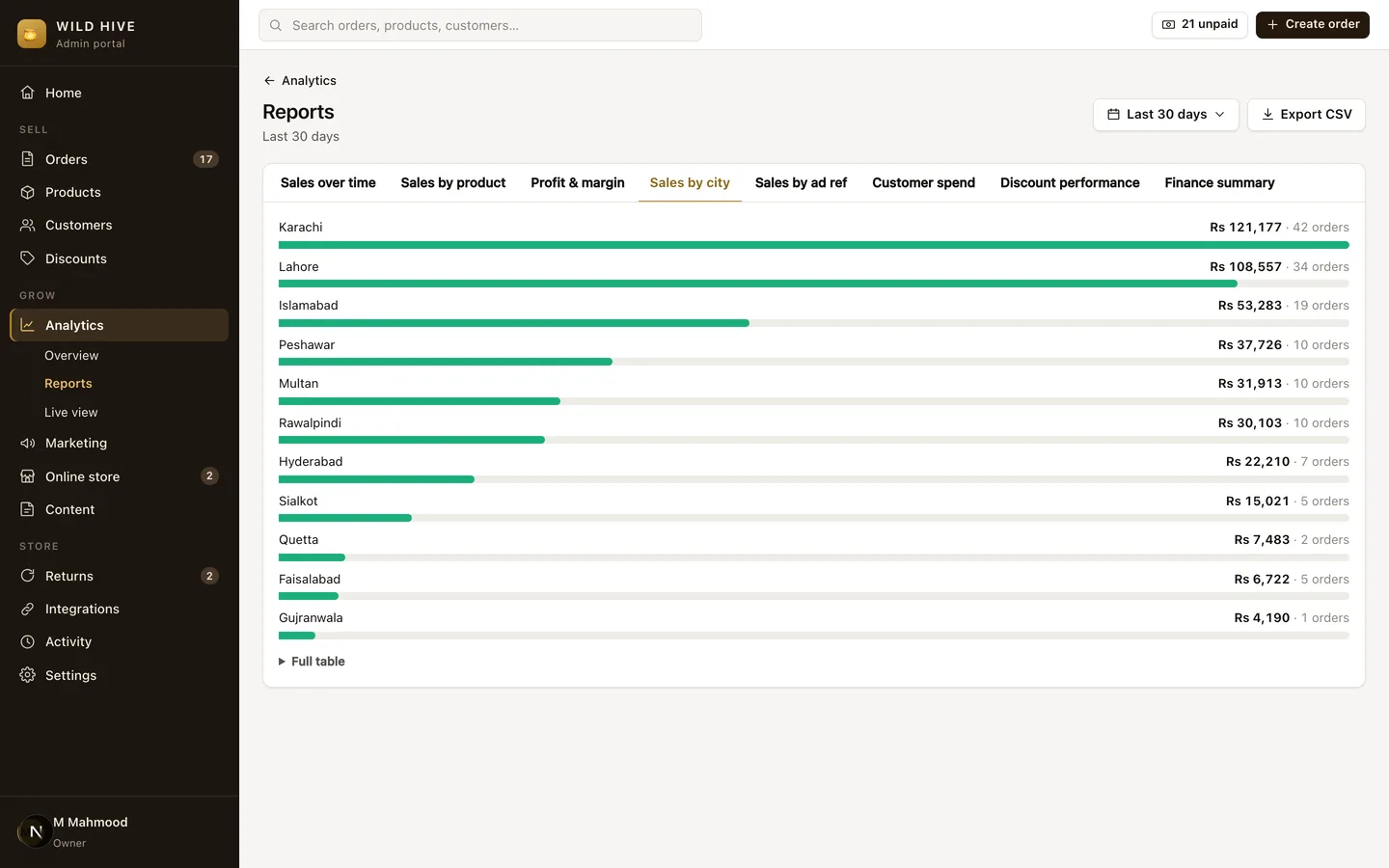
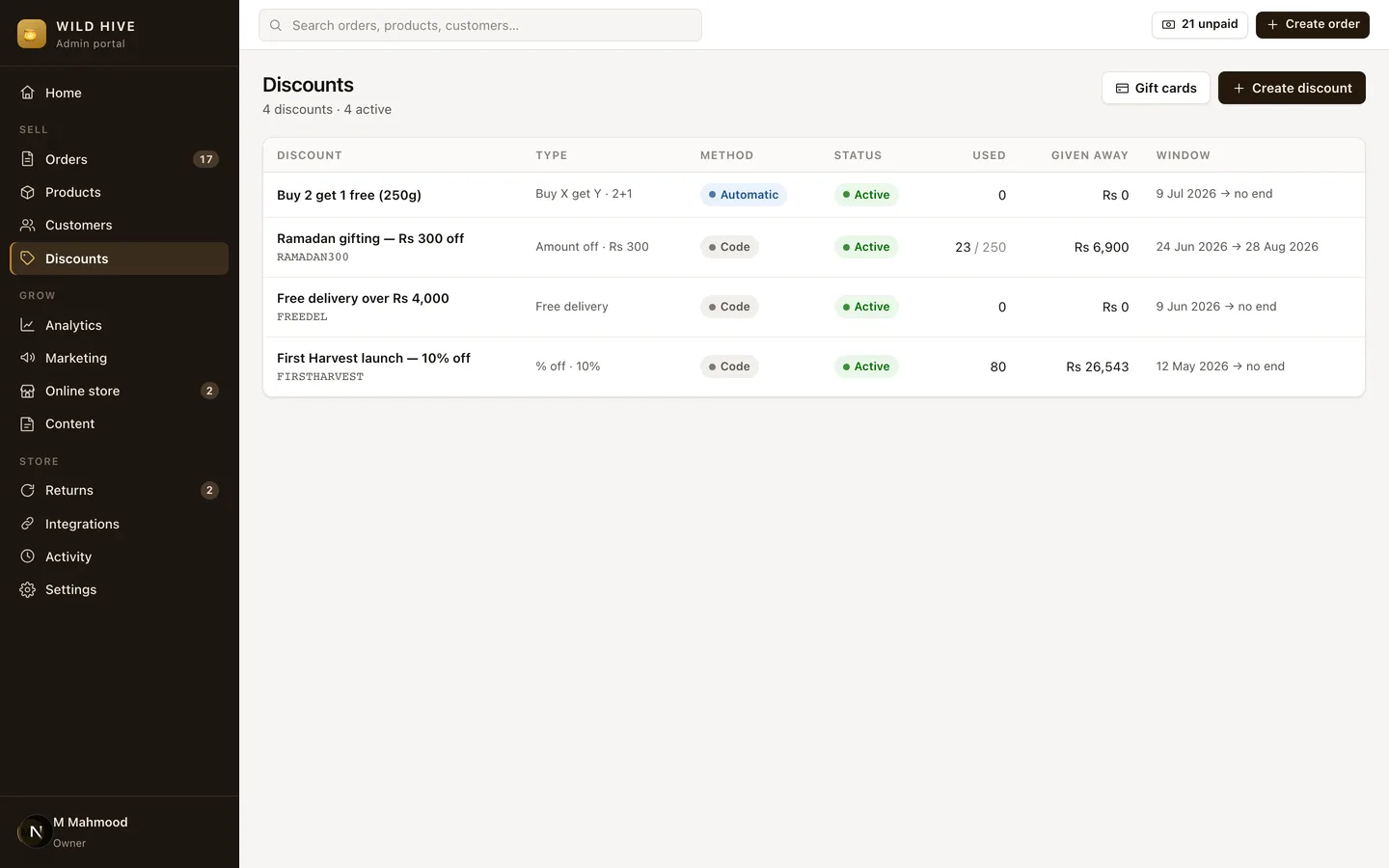
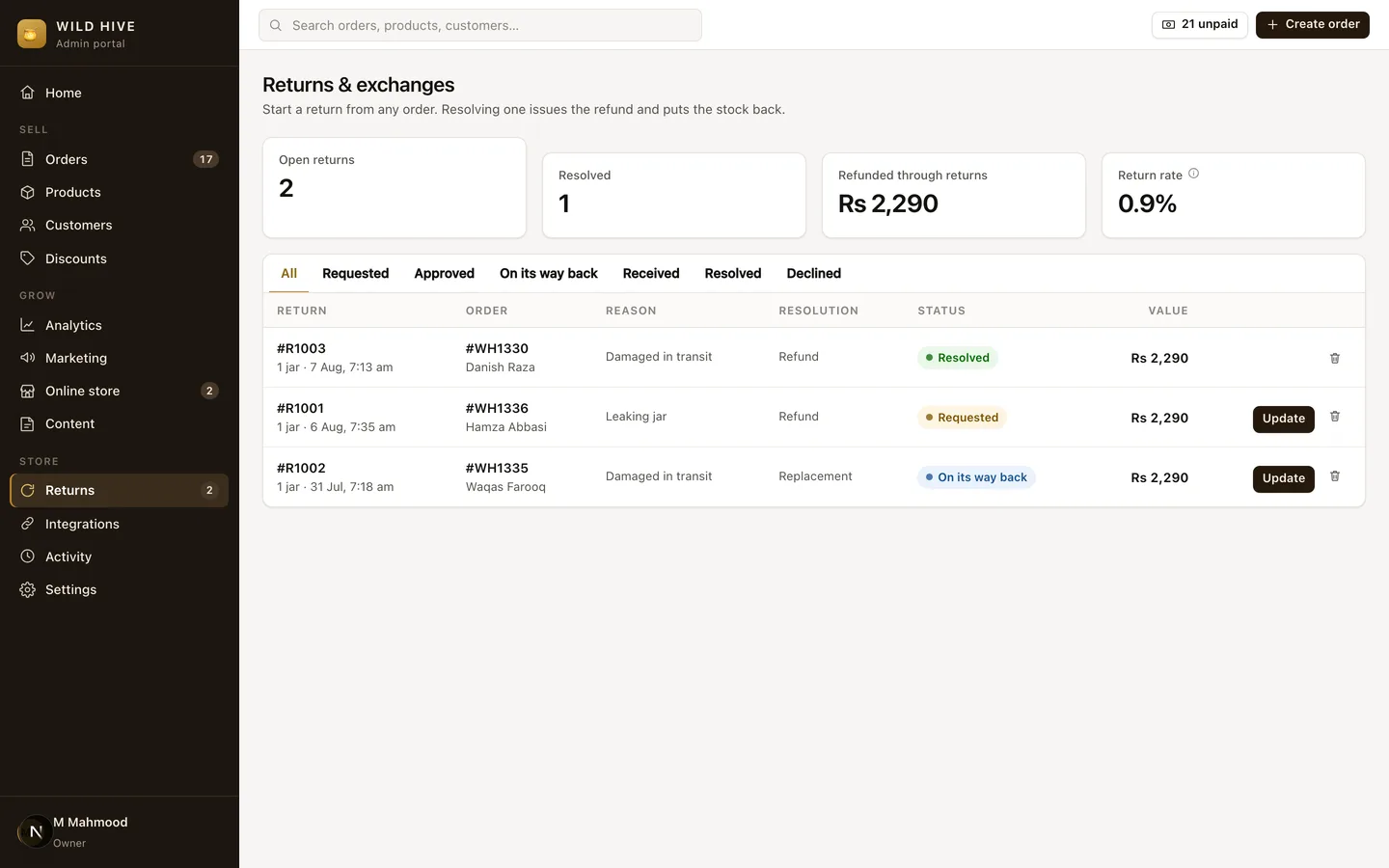
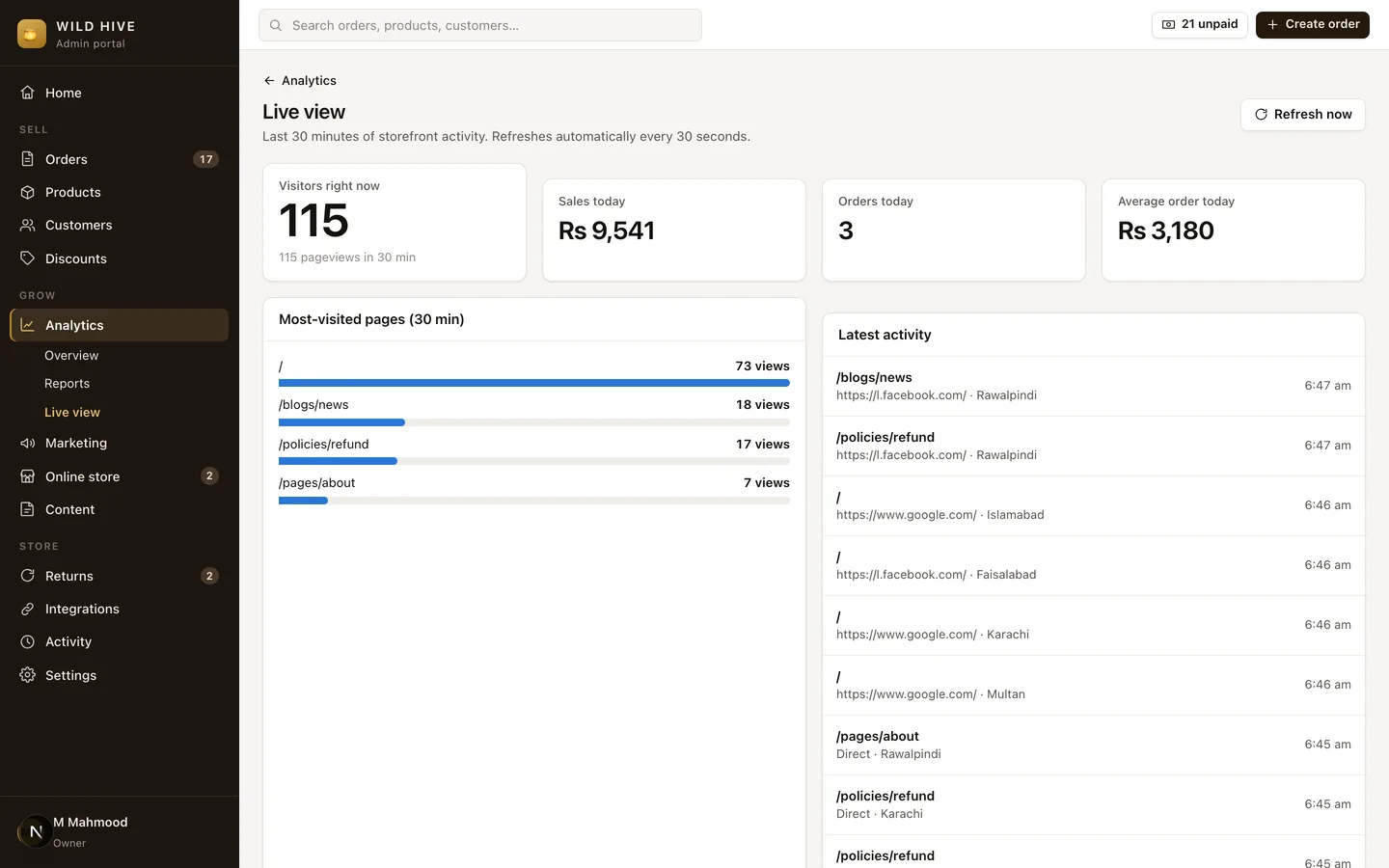
- Admin portal60 routes
- SQLitenode:sqlite · single filezero external services
- Automationswebhooks · email (Resend)
Architecture decisions I made
- D1One SQLite file, zero external servicesnode:sqlite holds all commerce data on one small VPS. The brand owns its data outright and the running cost is a server, not a percentage.Trade-off A single-node design; right for this scale, revisited if order volume ever demands it.
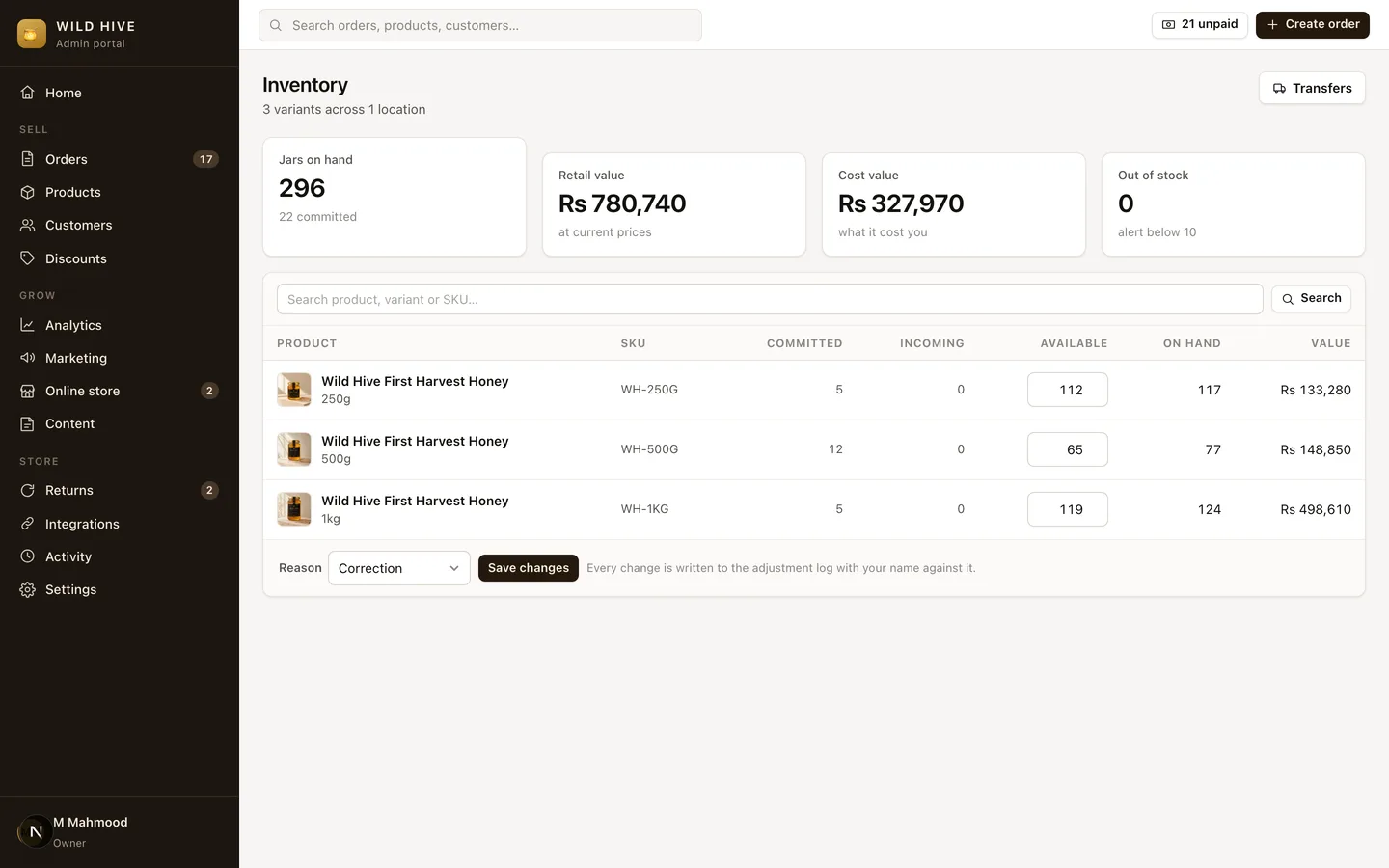
- D2Inventory in three bucketsAvailable, committed and incoming. An order placed but not yet shipped is neither sellable nor gone, which is exactly the state COD lives in.
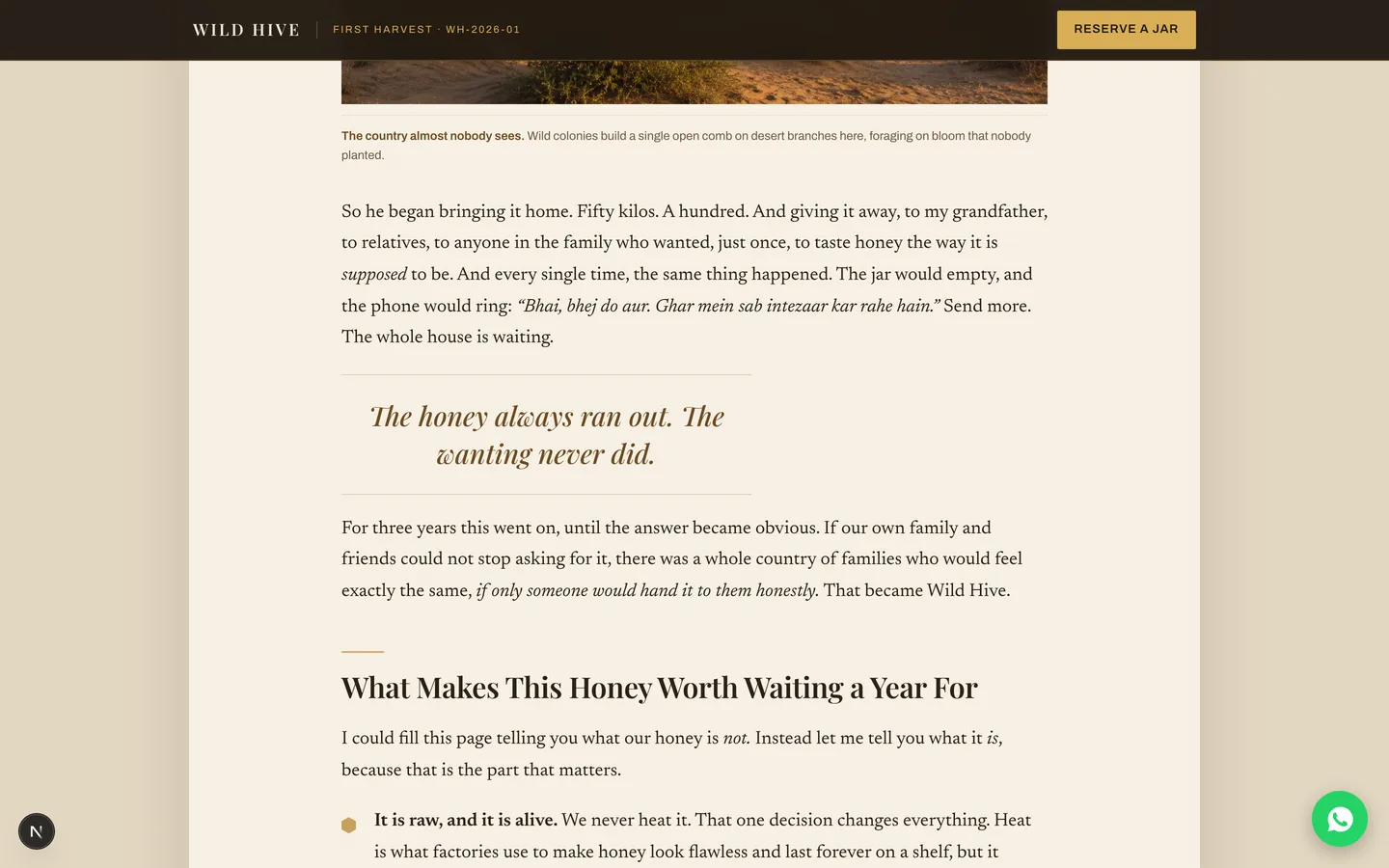
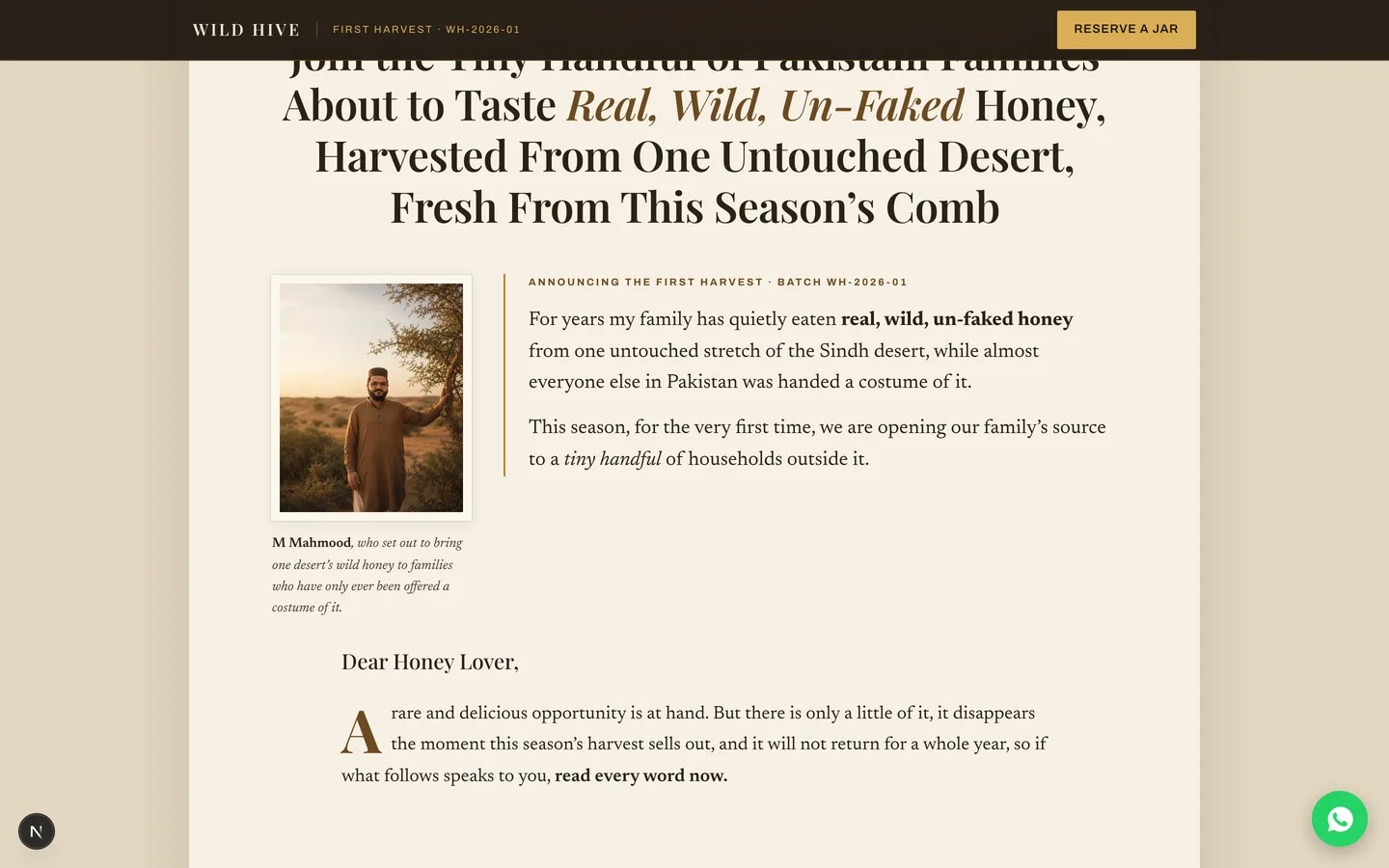
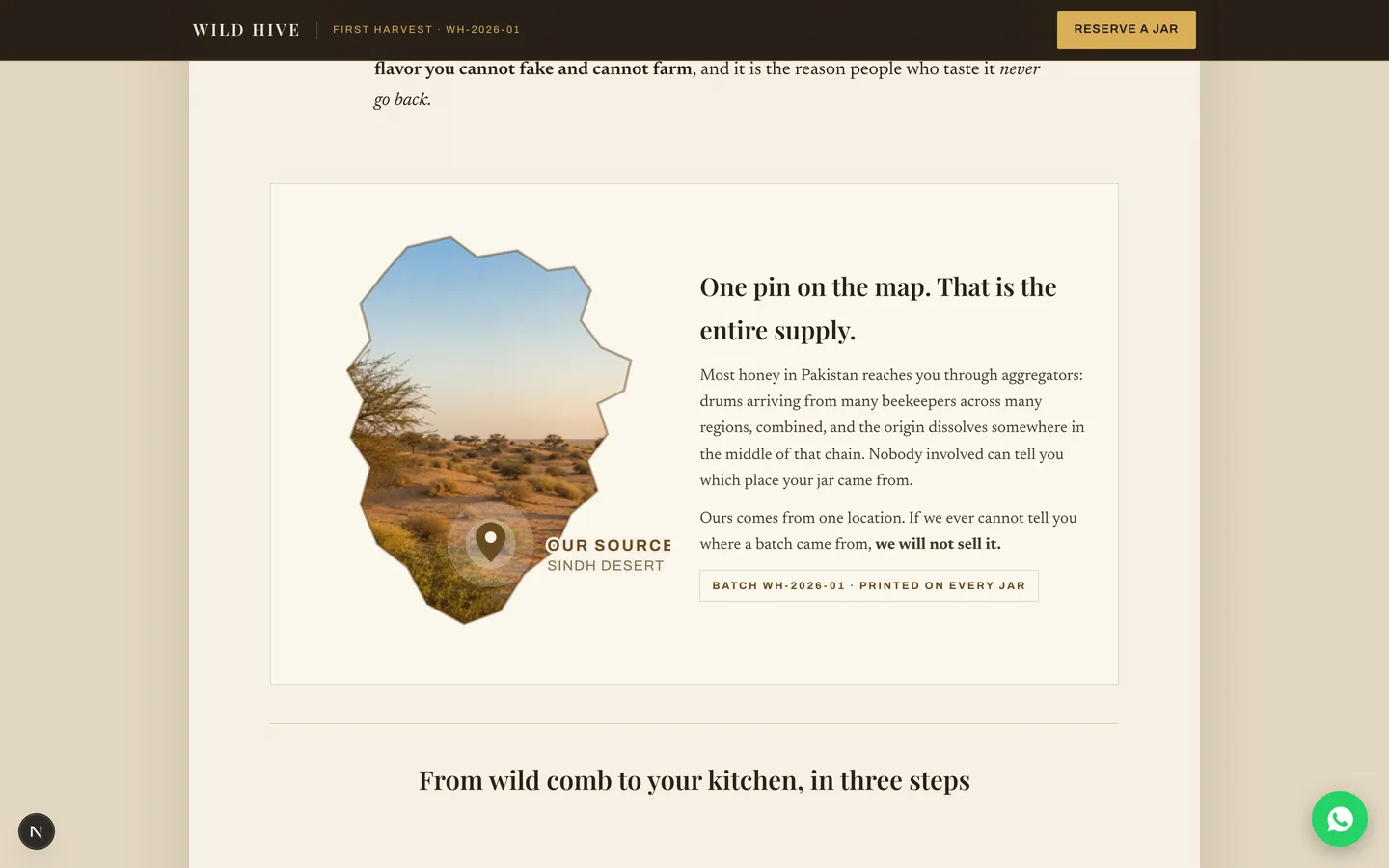
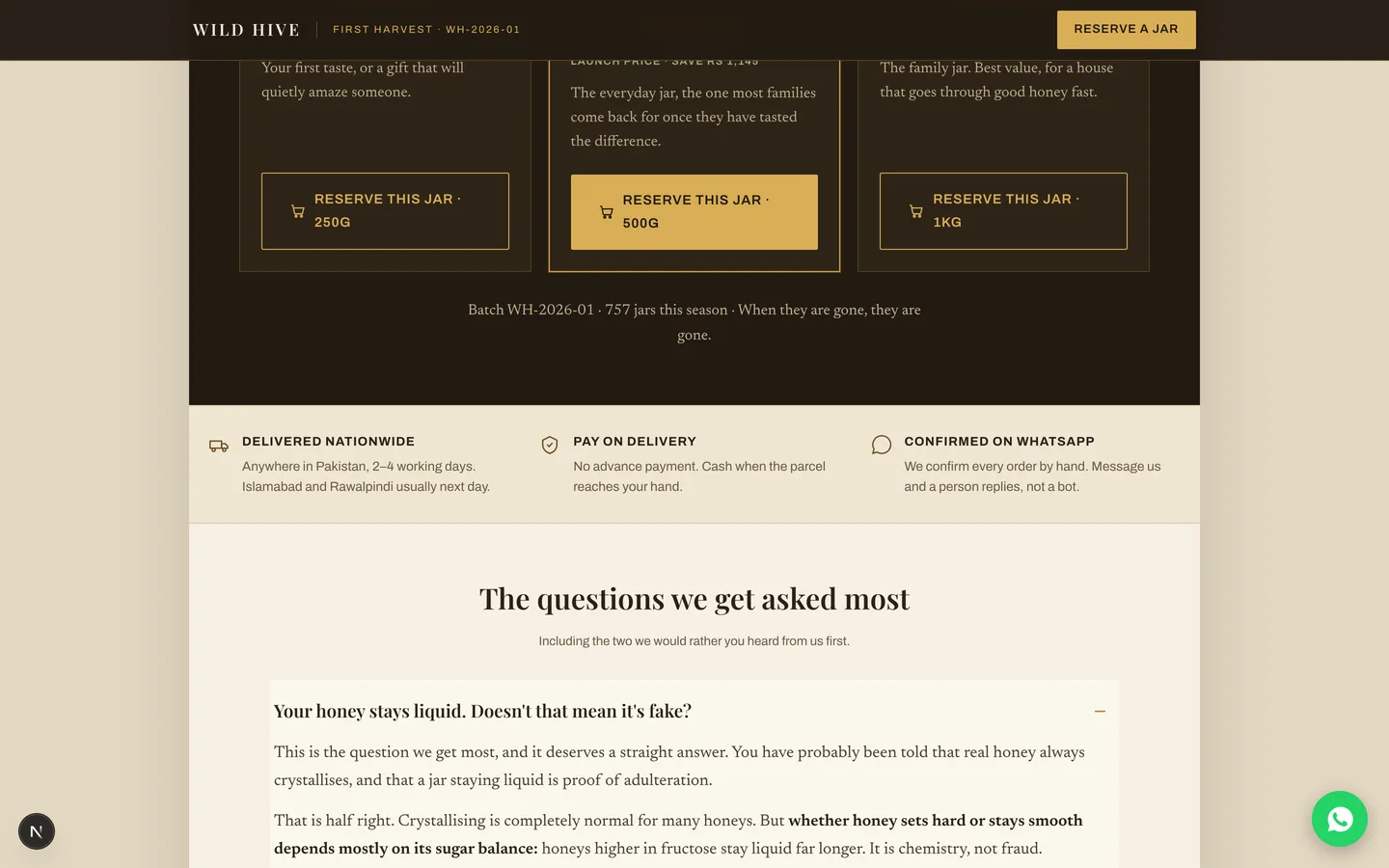
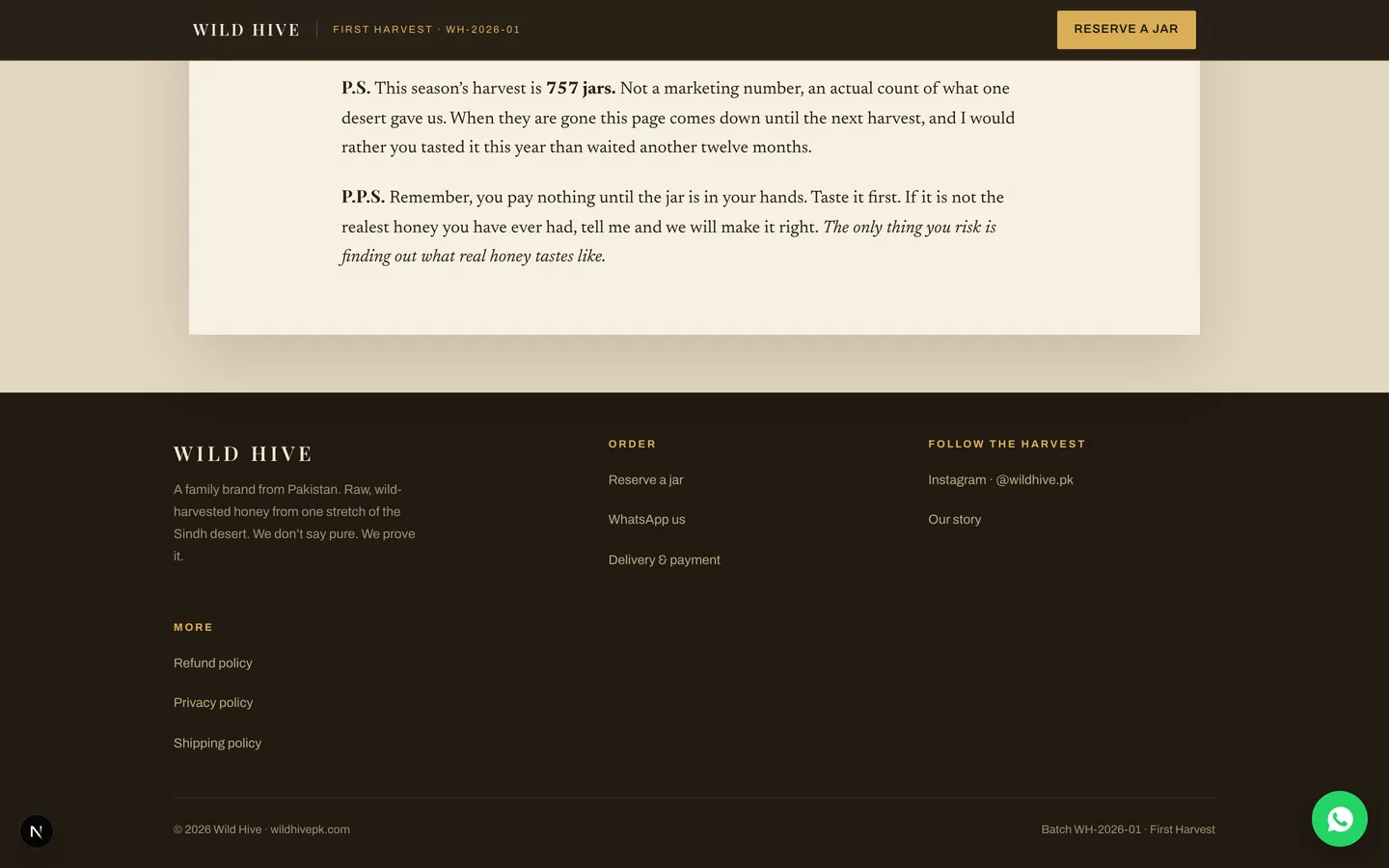
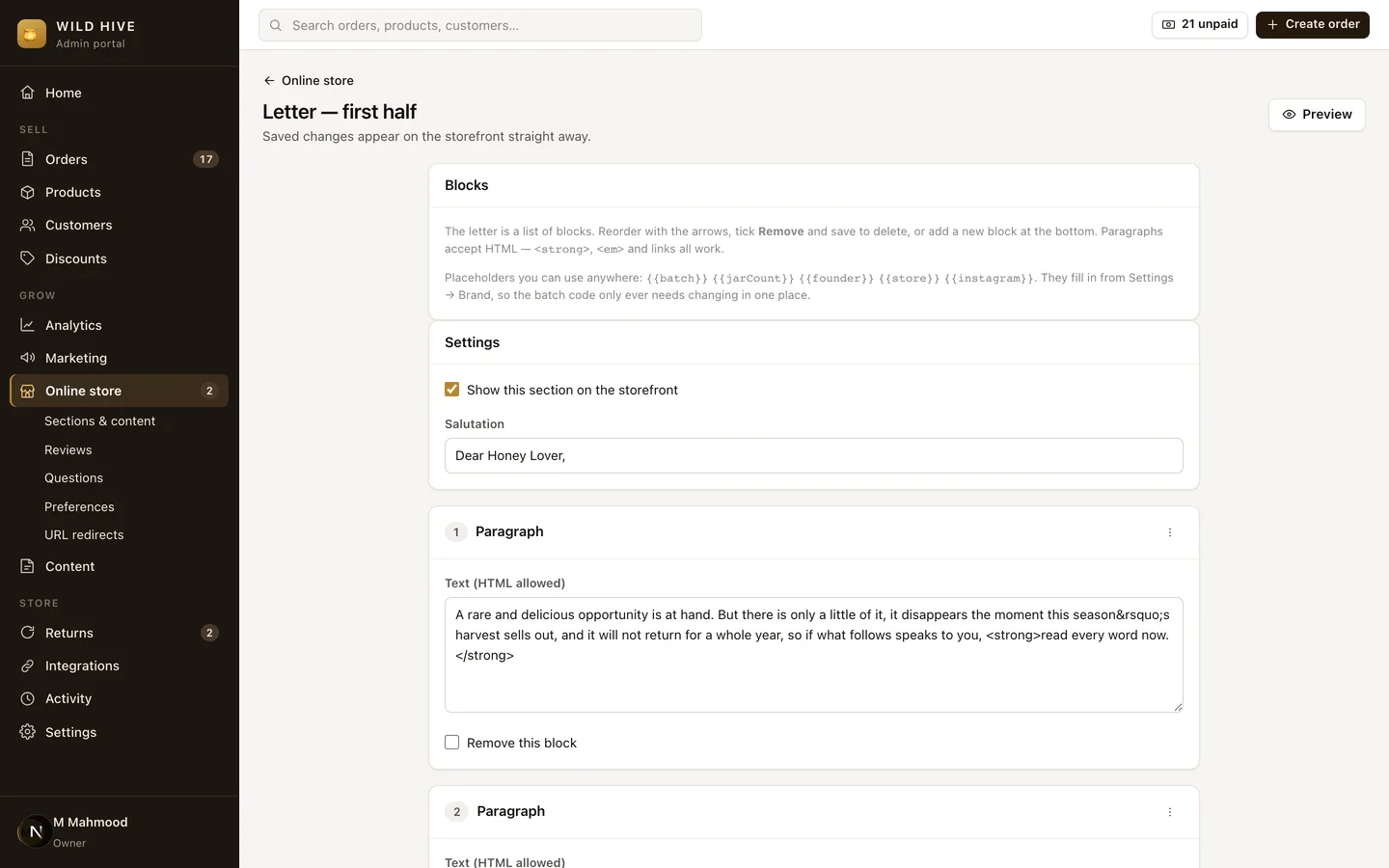
- D3The sales letter is data, not codeEvery storefront section is reorderable and editable; the letter is a list of blocks. Placeholders like {{batch}} fill from one setting, so a batch code changes the header, letter and SEO in one edit.
- D4Attribution rides the orderMeta's utm_source and fbclid fold into a short ad reference stored on the order, so sales by ad come straight out of the reports.
In practice
One COD order's life
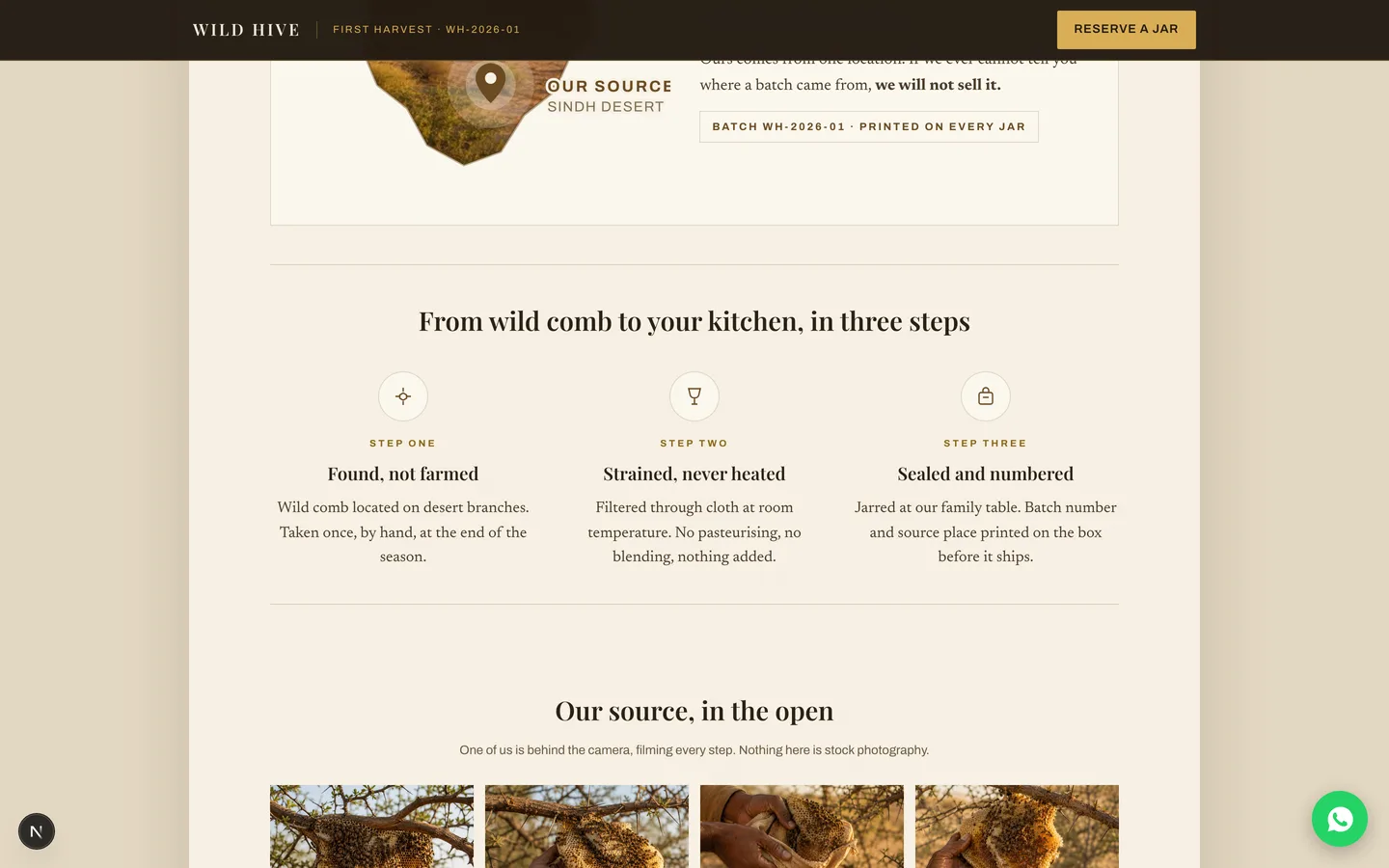
- OrderThe order drawer writes straight into the admin database; stock moves from available to committed.
- FulfilCourier and tracking number recorded; a printable manifest shows the cash to collect per parcel.
- CollectCash is marked paid on collection, so collected revenue is a real number.
- Or returnThe returns pipeline issues the refund on resolve and restocks.
Measured in production
What I took away
- Model the business's actual money flow, not the platform default.
- Owning the data model is what made COD reporting possible at all.
Questions about this project
What problem did Wild Hive solve?
A cash-on-delivery honey brand needed what Shopify offers without Shopify’s monthly fee, transaction cuts or ceiling.
Who built Wild Hive, and how does it work?
I did (Qalab Hassnain Agha). I designed and built the whole stack: storefront, 60-route admin portal, CMS and data model. How it works: I built the whole stack: a long-form editorial storefront tuned for Meta ad traffic, and a 60-route admin covering orders, fulfilment, inventory, customers, discounts, analytics, returns, automations and webhooks. Every word on the storefront is editable from the admin. Stack: Next.js 15, React 19, TypeScript, SQLite (node:sqlite), Server Actions, Server Components, Resend, Meta Pixel.
What results did Wild Hive achieve?
60 routes on a single SQLite file, zero external services. Runs on one small VPS instead of a platform fee plus transaction cuts. The brand owns its commerce data outright.
Can I hire Qalab to build something similar to Wild Hive?
Yes. Contracts from $25 an hour, full-time remote from $3,000 a month, fixed-price prototypes from $600 and builds from $2,000, and fractional CTO retainers from $800 a month. Book a free 30-minute call and I will tell you honestly whether and how I would build it.
Gallery