CTO & AI Systems Architect
Qalab
Hassnain
Backend · Deep Learning · LLMs · Computer Vision · Data Science · IoT · Cloud

Qalab
Hassnain
Co-Founder, CTO & AI Systems Architect
Education
- MS Computer Science
- Centre for Advanced Studies in Engineering (CASE)
- B.E. Computer Engineering
- National University of Sciences and Technology (NUST)
Who I Am
Co-Founder & CTO of Quickgen Technologies and AI Systems Architect, based in Islamabad, Pakistan, with 6+ years of engineering experience — 4+ of them building production AI systems. I focus on deep learning, LLM pipelines, and computer vision. Additionally, I bring expertise in real-time data, MLOps, and cloud deployment on AWS and Azure. As a result, I've shipped 15+ products from idea to launch — leading teams across healthcare, hospitality, fintech, and consumer tech. My technical foundations are backed by 16 certifications in machine learning, data science, and NLP.
Certifications
- Neural Networks and Deep Learning — Coursera
- AI for Medical Diagnosis — Coursera
- Applied Data Science with Python Specialization — Coursera
- Introduction to Data Science in Python — Coursera
- Applied Machine Learning in Python — Coursera
- Tools for Data Science — Coursera
- Applied Text Mining in Python — Coursera
- Open Source Tools for Data Science — Coursera
- Applied Social Network Analysis in Python — Coursera
- Data Science Orientation — Coursera
- Applied Plotting, Charting & Data Representation in Python — Coursera
- Deep Learning with Python — Udemy
- Python 3.6 Complete Course — Udemy
- Mastering Interview Skills — Udemy
- Programming in C# — Udemy
- Microsoft Office Specialist Word 2013 — Microsoft
AI, ML & Deep Learning
20 tools- Deep Learning
- Neural Networks
- TensorFlow
- Keras
- YOLOv8
- OpenCV
- LLMs
- Whisper
- Deepgram
- Gemini API
- GPT-4
- RAG
- NLP
- Text Mining
- LSTM
- scikit-learn
- ElevenLabs
- Sentence Transformers
- Replicate API
- Prompt Engineering
Data Science & Analytics
11 tools- Python
- Pandas
- NumPy
- Matplotlib
- Seaborn
- Jupyter
- Data Visualisation
- scikit-learn
- ChromaDB
- Vector DBs
- Model Fine-tuning
Backend & APIs
12 tools- FastAPI
- Flask
- Django
- .NET Core
- C#
- Node.js
- WebSockets
- REST APIs
- Microservices
- gRPC
- MQTT
- UDP
Cloud & Infrastructure
9 tools- AWS
- GCP
- Azure
- Vercel
- Docker
- Kubernetes
- CI/CD
- Redis
- Nginx
Databases & BaaS
7 tools- PostgreSQL
- SQL Server
- MongoDB
- Firebase
- Supabase
- ChromaDB
- Vector DBs
Observability & DevTools
7 tools- Grafana
- Sentry
- Glitchtip
- Prometheus
- Docker Compose
- GitHub Actions
- Postman
Frontend & Mobile
6 tools- React
- Next.js
- Flutter
- React Native
- Tailwind
- TypeScript
IoT & Hardware
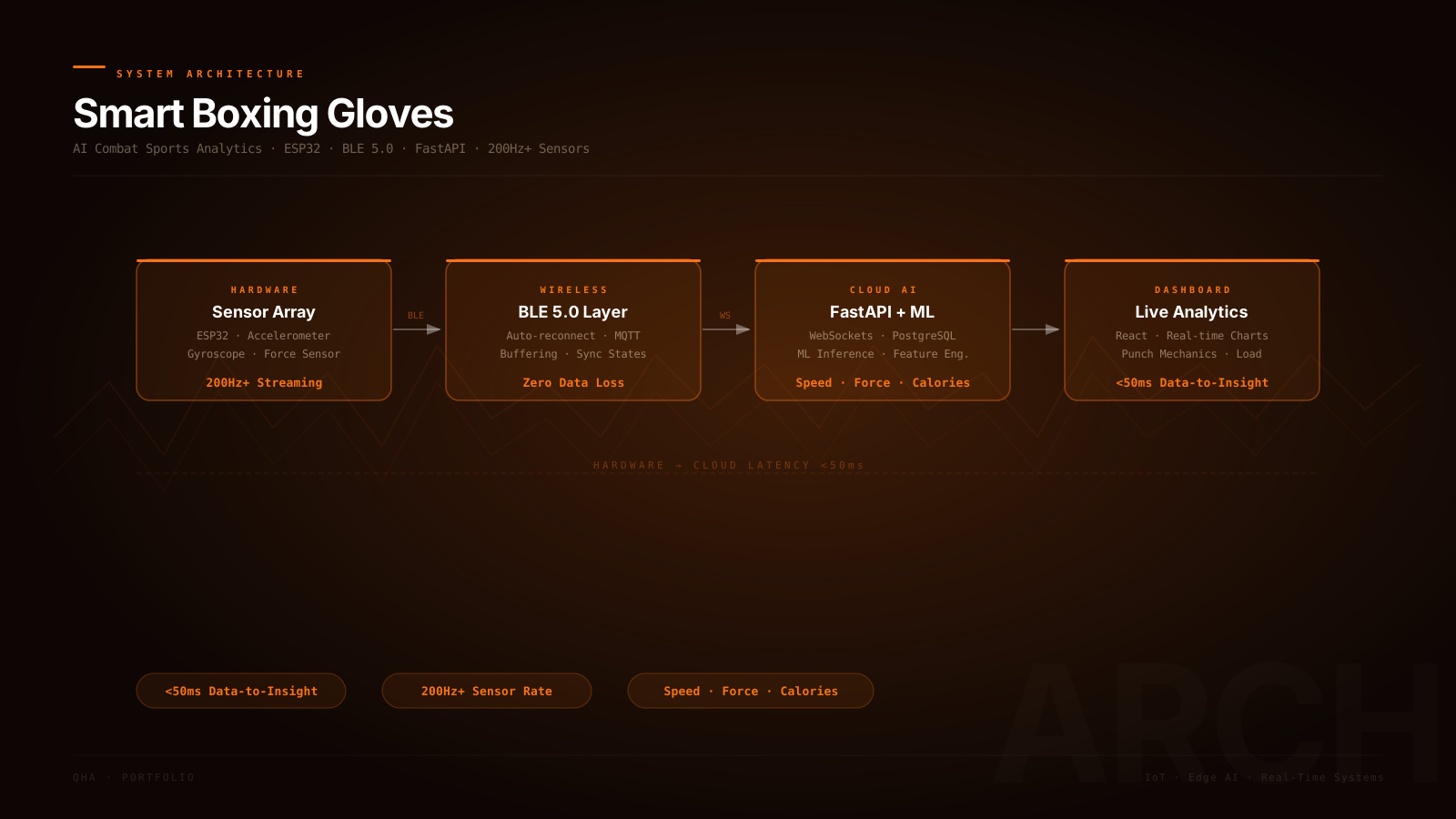
7 tools- BLE 5.0
- ESP32
- MQTT
- Edge AI
- PCM Audio
- FFmpeg
- 200Hz+ Streaming
Projects
AI & Computer Vision5
Vision models, LLM pipelines, and NLP systems running against live production traffic.
 AI Vision · Generative · ProductInterior Design AIAI-Powered Room StylingPythonPillowOpenCVView case study
 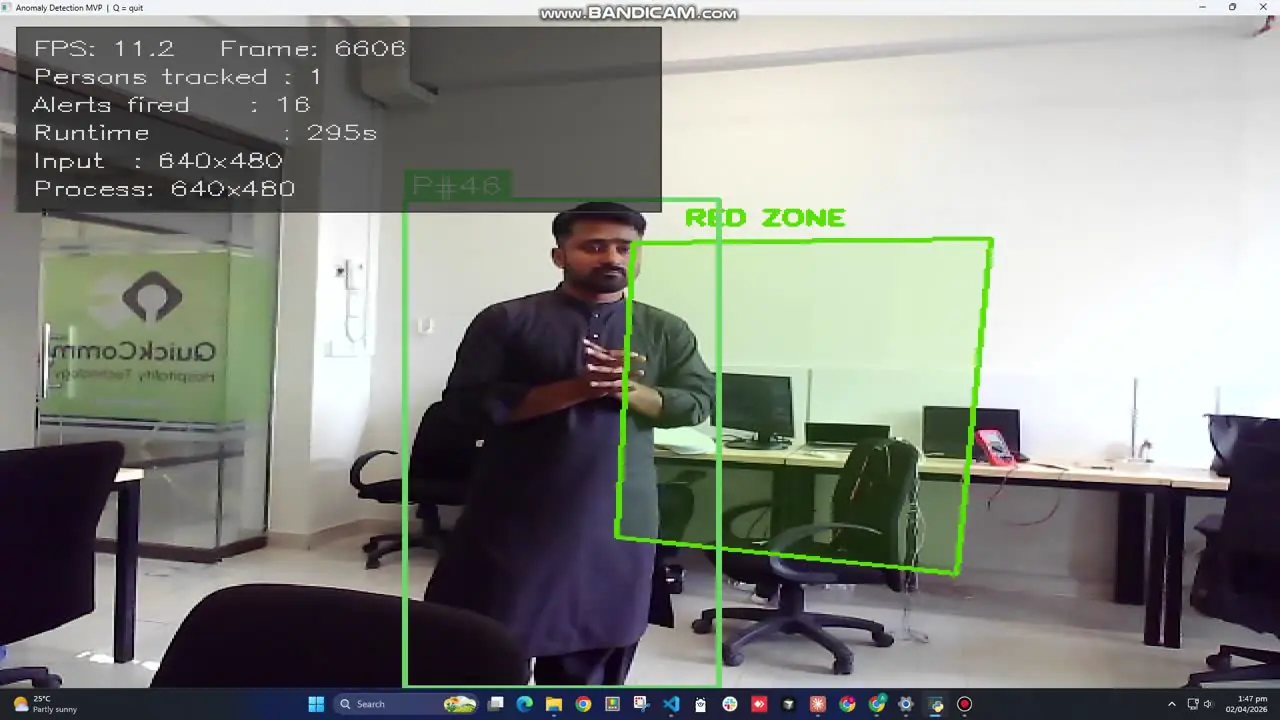 Computer Vision · AI · SecurityCCTV Anomaly AIReal-Time Surveillance IntelligenceYOLOv8OpenCVFastAPIView case study
 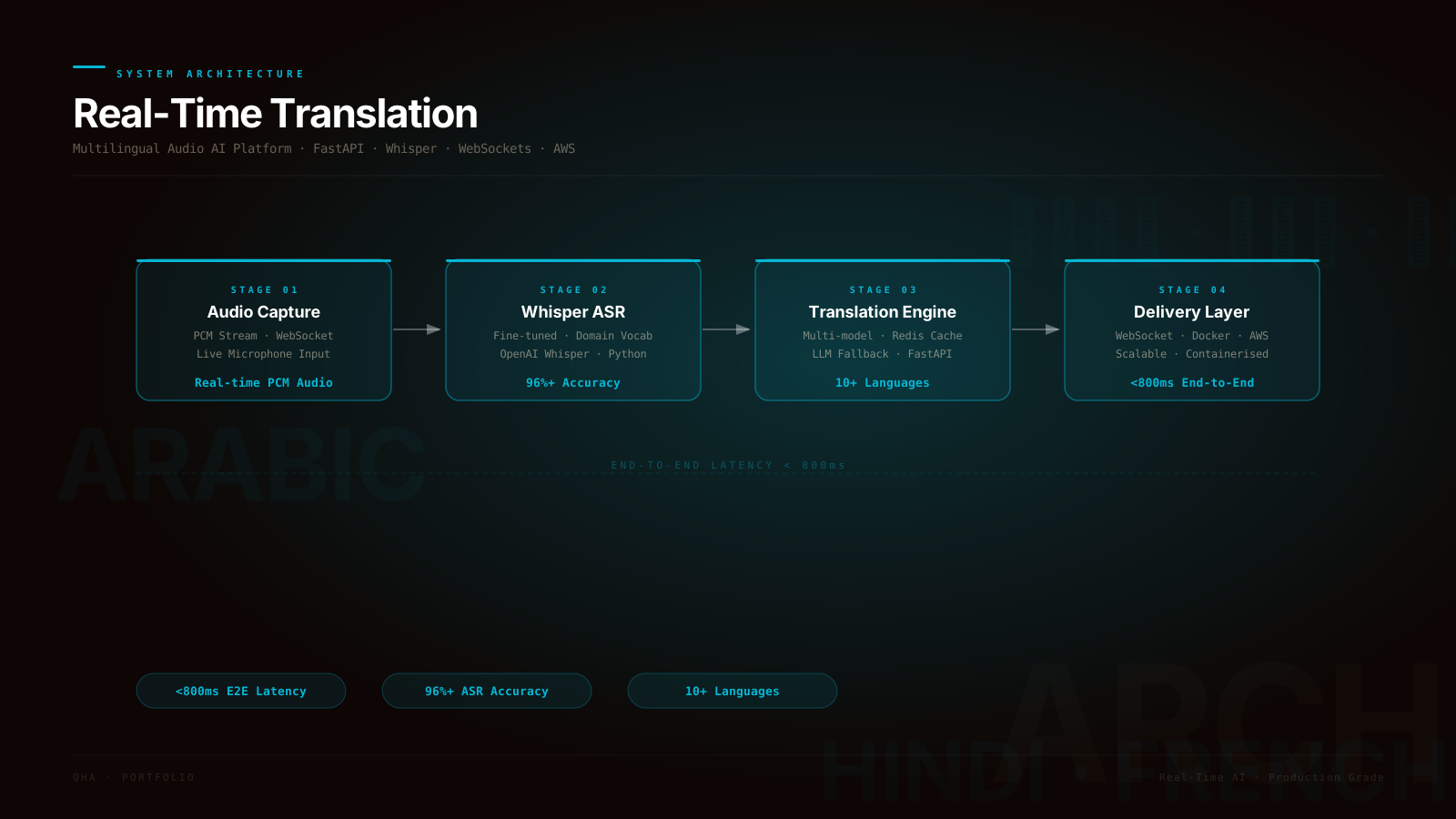 LLM · Real-Time · AudioReal-Time TranslationMultilingual Audio AI PlatformFastAPIWhisperPythonView case study
 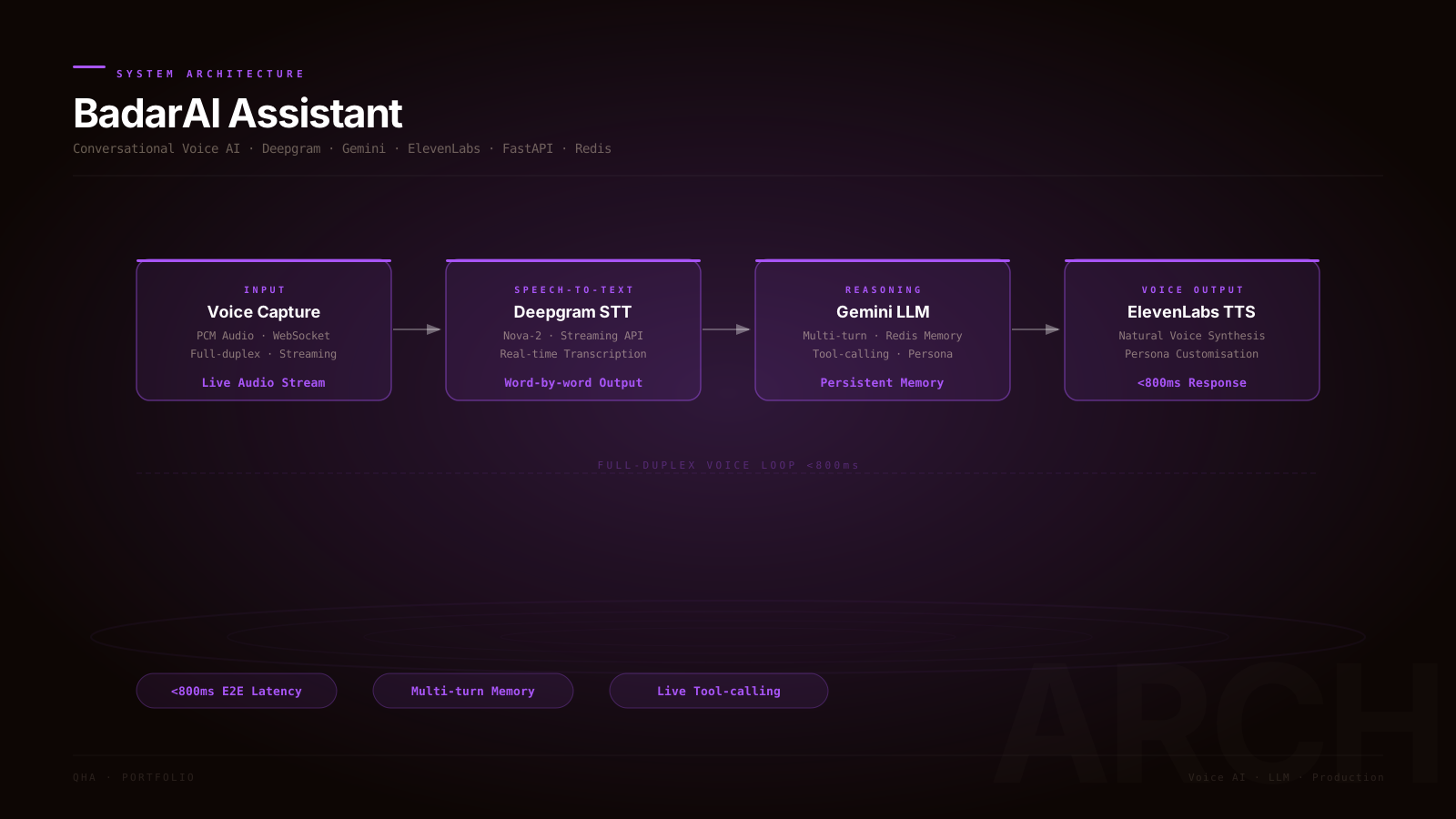 LLM · Voice · AI AssistantBadarAI AssistantConversational Voice AIFastAPIGemini APIDeepgramView case study
 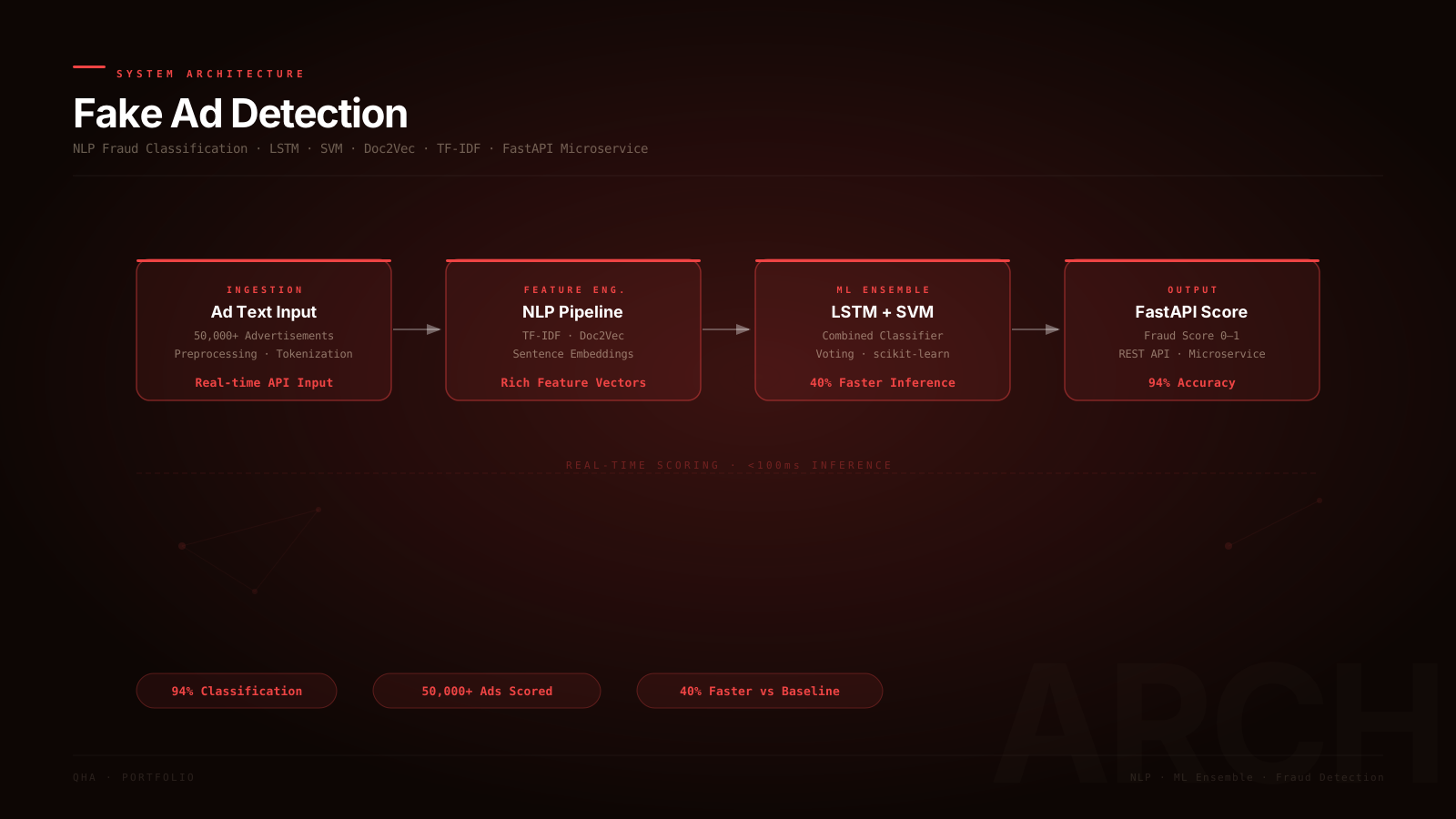 NLP · AI · Fraud DetectionFake Ad DetectionNLP Fraud Classification SystemPythonLSTMSVMView case study
Web Apps & Platforms4
Full-stack products and the admin systems behind them, from storefronts to enterprise digital twins.
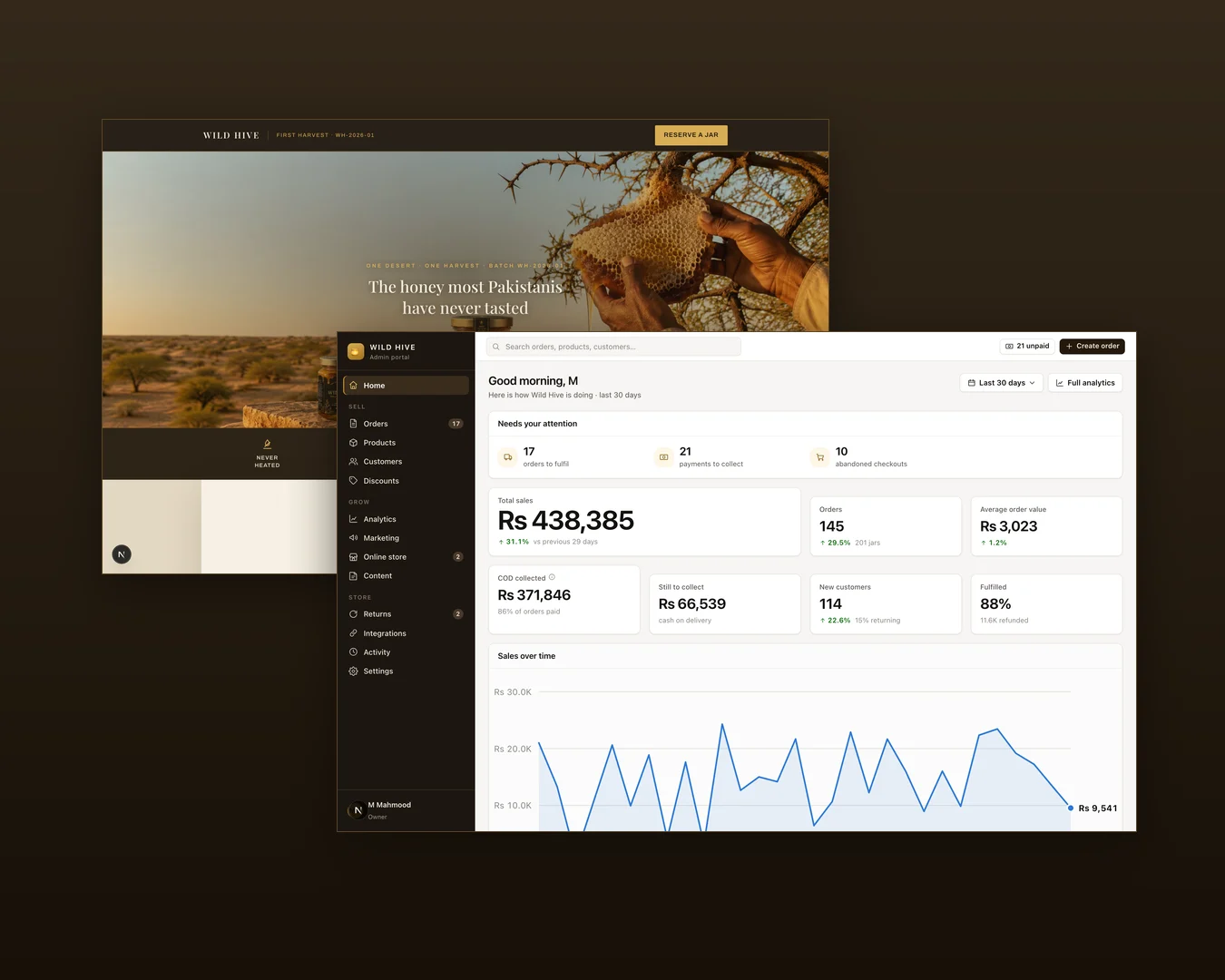 E-Commerce · Full-Stack · CMSWild HiveSelf-Hosted Shopify Alternative for a COD BrandNext.js 15React 19TypeScriptView case study
 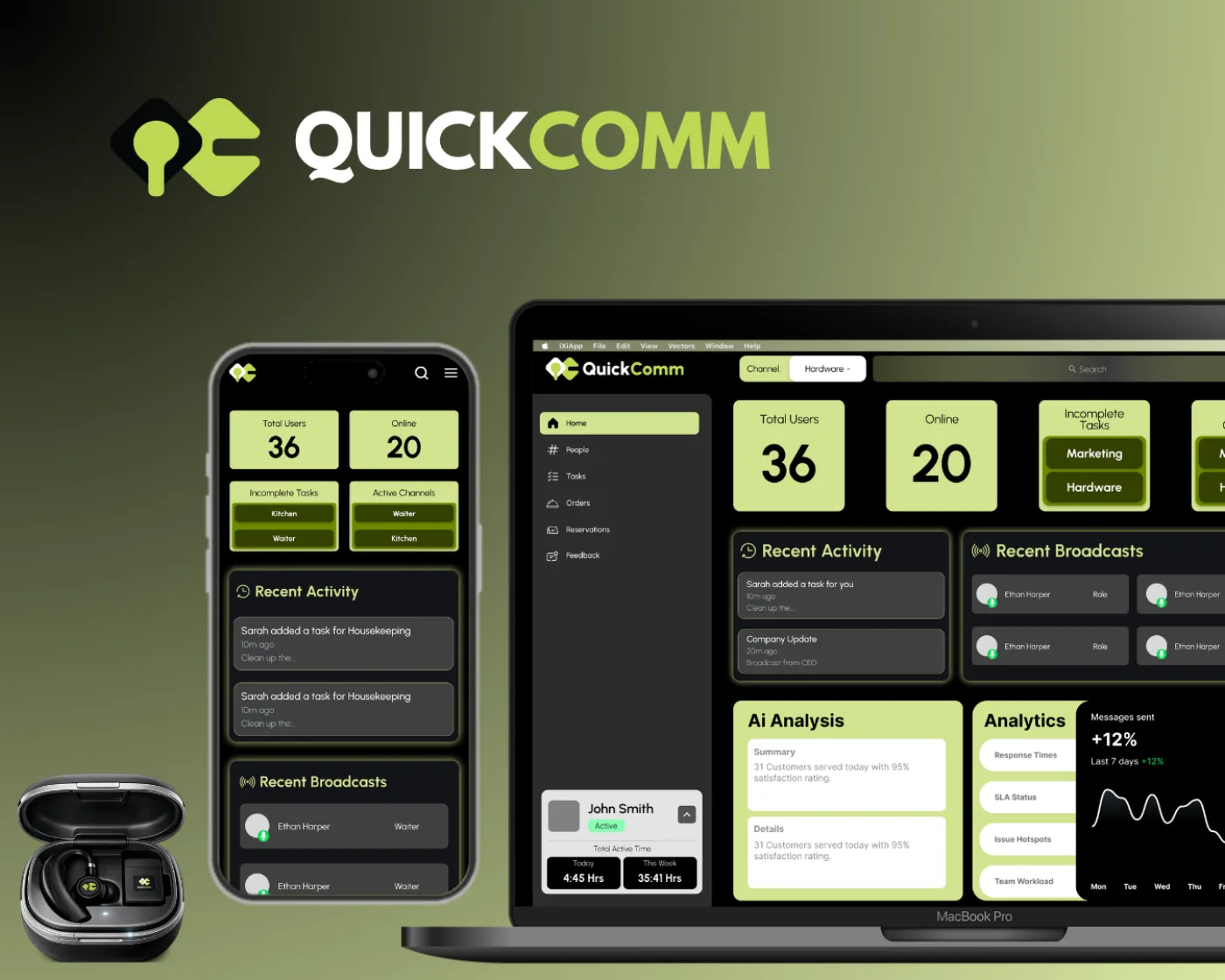 LLM · Real-Time · HospitalityQuickCommAI Hospitality Communication EngineFastAPIGemini APIDeepgramView case study
 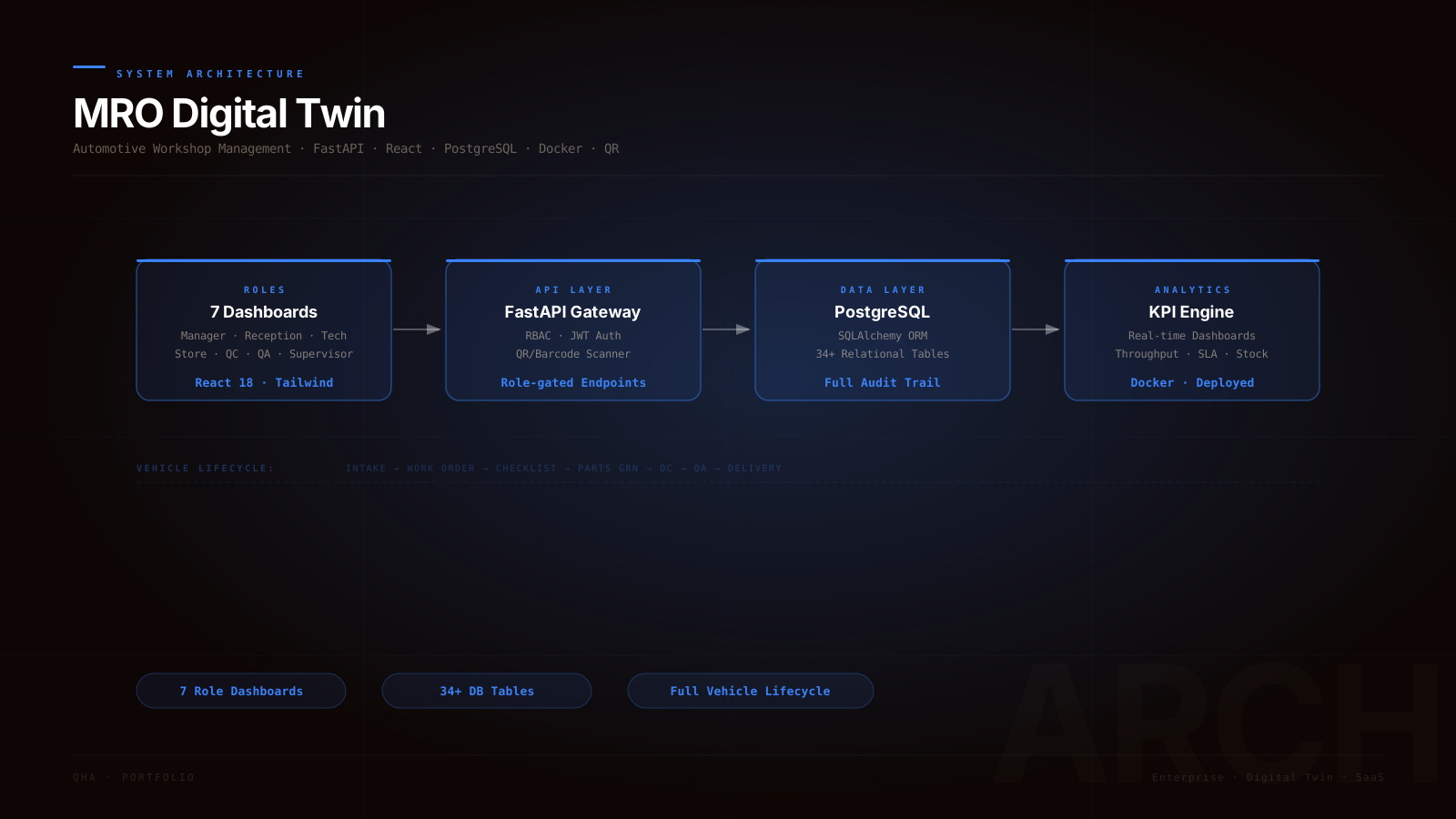 Enterprise · Digital Twin · SaaSMRO Digital TwinAutomotive Workshop ManagementFastAPIReactPostgreSQLView case study
 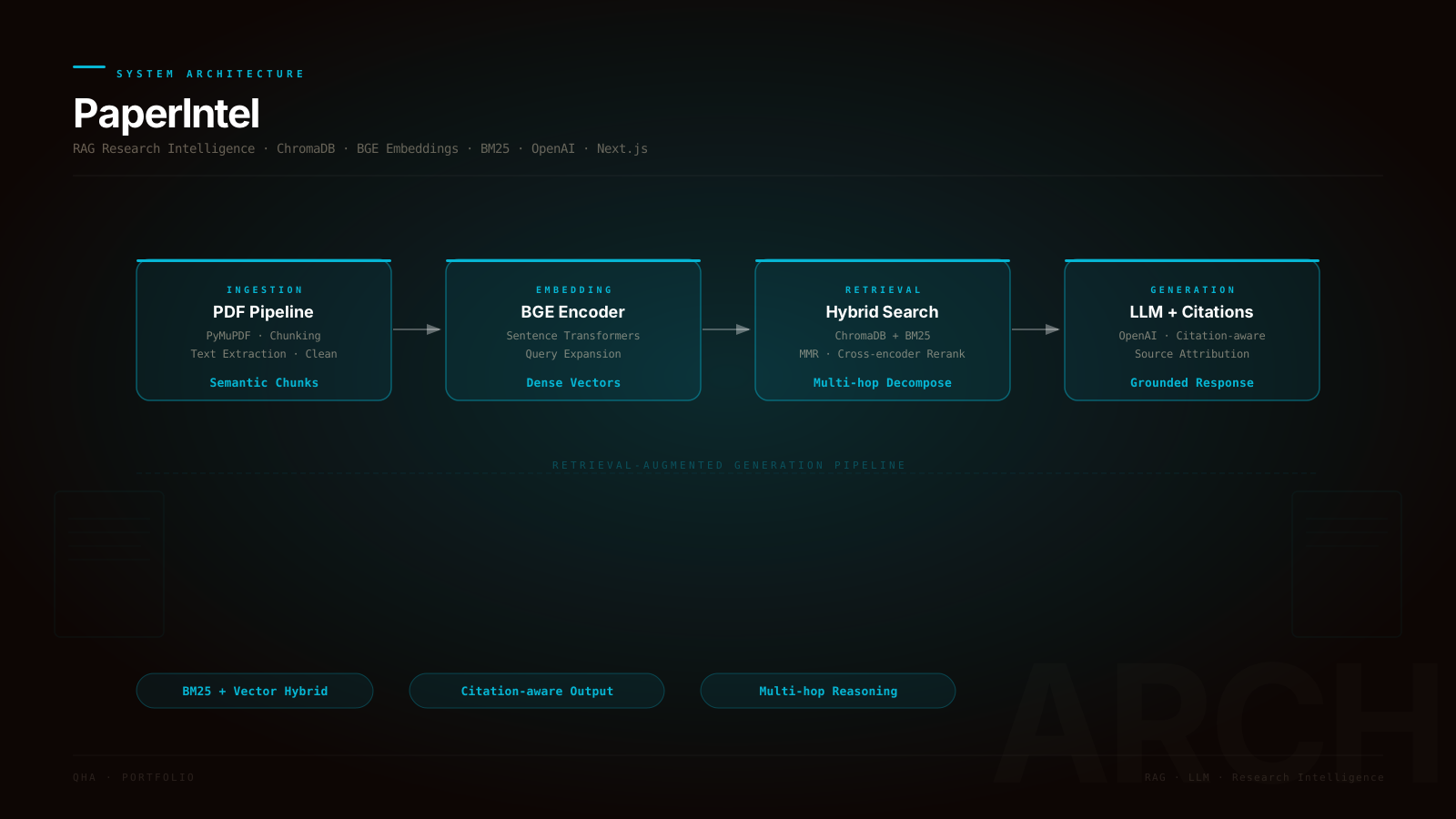 AI · LLM · ResearchPaperIntelRAG Research IntelligenceFastAPIChromaDBSentence TransformersView case study
Mobile Apps4
iOS and Android apps built for offline reliability and real-world conditions.
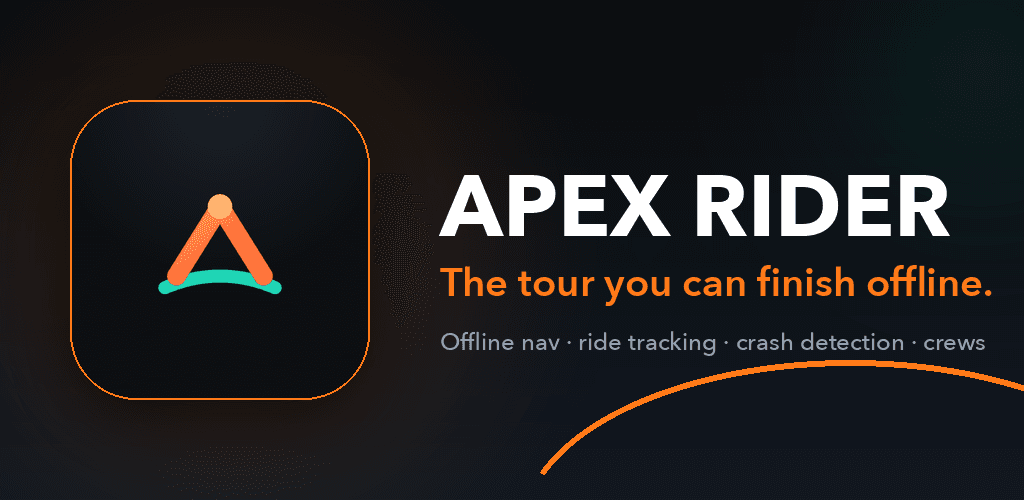 Mobile · Navigation · SafetyApex RiderOffline-First Motorcycle Tour CompanionReact Native (Expo)TypeScriptWatermelonDBView case study
  Healthcare · IoT · SaaSupLYFTPhysical Rehabilitation PlatformFastAPIFlutterBLE 5.0View case study
 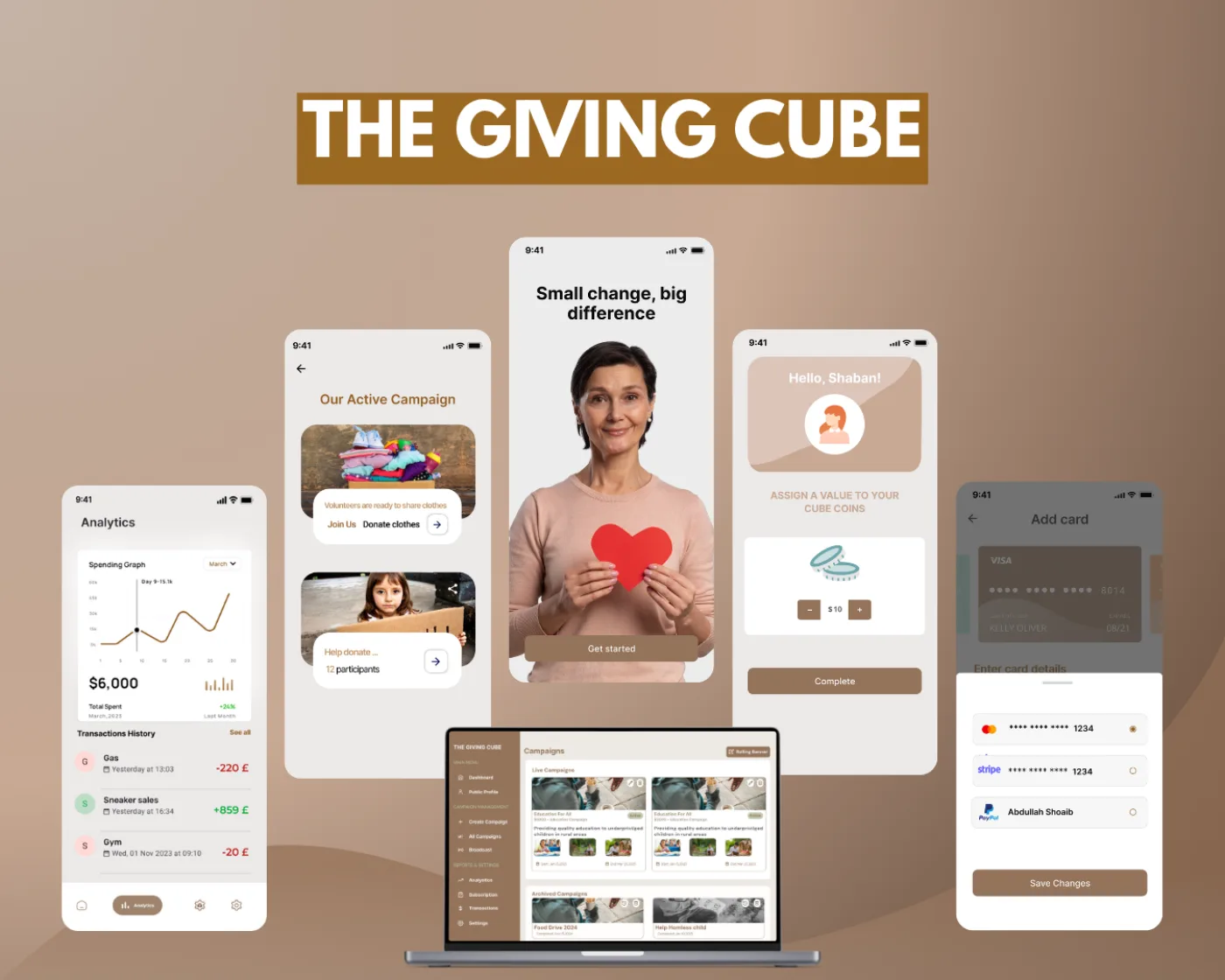 FinTech · IoT · MobileThe Giving CubeIoT Donation EcosystemFastAPIStripePostgreSQLView case study
 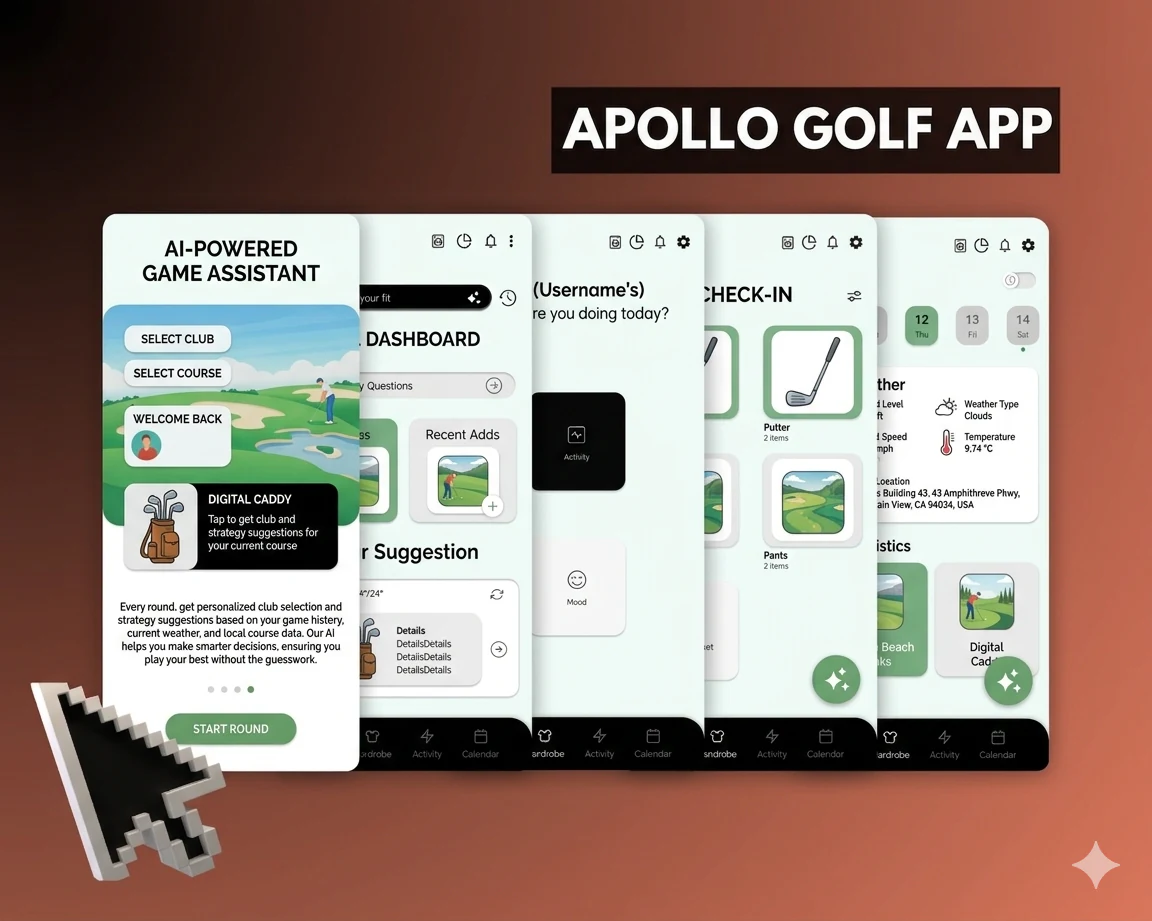 Mobile · GPS · Sports TechApollo Golf GPSSmart Caddie Companion AppFlutterFastAPIGoogle Maps APIView case study
IoT & Hardware2
Wearables, embedded sensors, and edge AI streaming at high frequency.
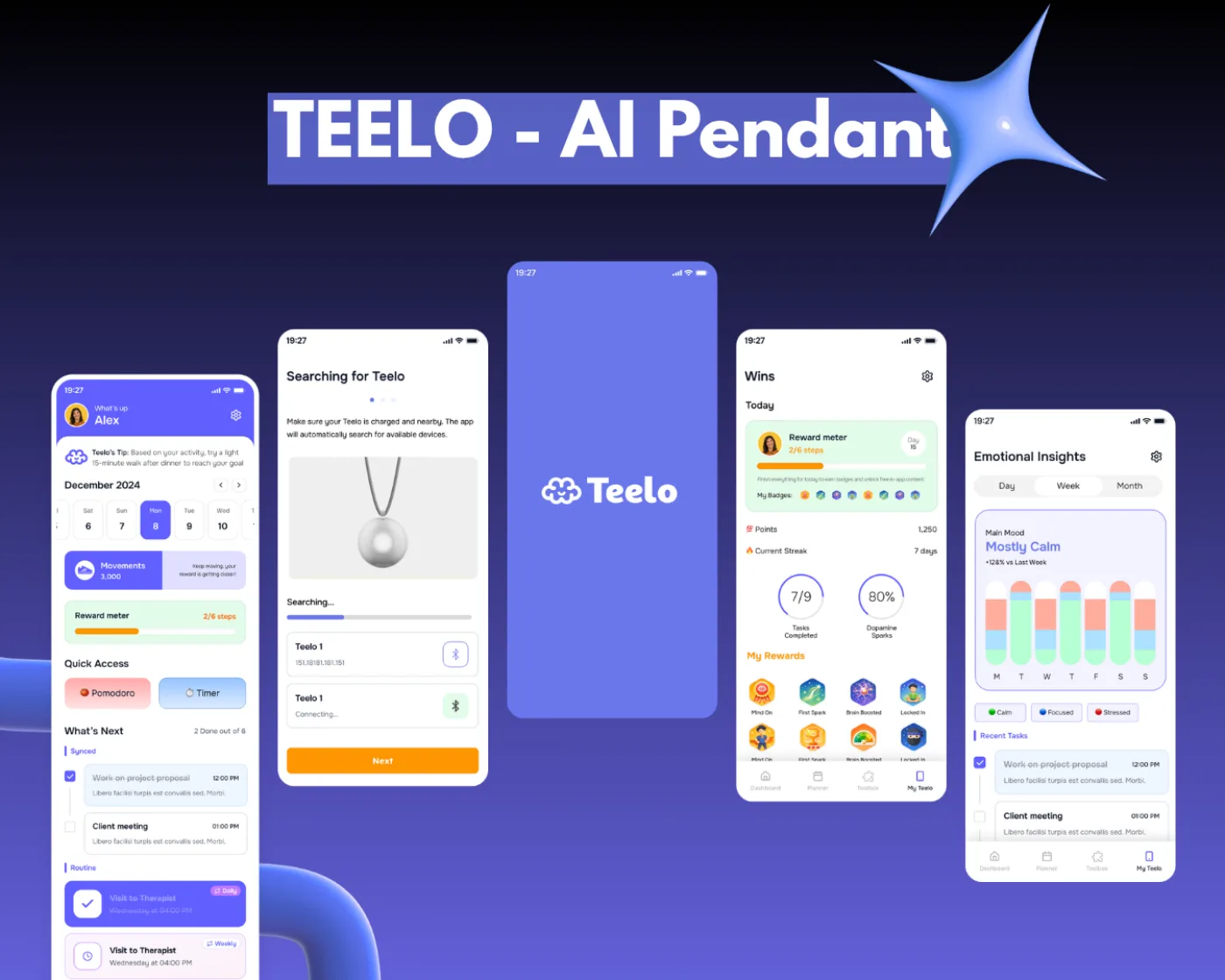
15 projects · see the full index
Production AI Insights
How to Deploy a Computer Vision Model to Production
Most CV tutorials end at model training. This guide covers every layer I put in place before any vision model goes live …
Building Real-Time IoT Systems with BLE and WebSockets: Lessons from 200Hz+ Sensor Streaming
The hardest part of building wearable tech isn't the AI. It's the 200 milliseconds between the sensor and the screen. Fo…
LLM-Powered Real-Time Audio Pipelines: How We Built AI Transcription at Scale
Most developers think the hard part of voice AI is the speech-to-text model. It isn't. The hard part is everything aroun…
Chief Technology Officer
- Stepped into the dedicated CTO role in 2026 after architecting and building QuickComm from first prototype to production under Quickgen Technologies.
- Architected a real-time audio communication system replacing walkie-talkies in hotels, cutting staff response time by ~45%.
IoT & Full Stack Developer
- Deployed complete backend & web-app for a two-sided physiotherapy platform, reducing clinician onboarding time by ~60%.
- Integrated ML-based kinematics pipeline — gait analysis and kinetics models achieving 92%+ movement classification accuracy from IoT wearable sensors.
Co-Founder & Chief Technology Officer
- Leading technical strategy and end-to-end delivery across AI, IoT, and SaaS products in healthcare, hospitality, fintech, and consumer tech.
- Shipped CCTV anomaly detection system (YOLOv8) with 91% accuracy across 8+ simultaneous camera feeds, reducing false alerts by 35%.
Freelance (Upwork & Direct)
AI Engineer & Backend Developer
- Delivered 15+ AI and backend solutions for international clients — computer vision (OCR, pose estimation, object detection), NLP automation pipelines, and full-stack web apps.
CareCloud
Information Technology Intern
- Built health services REST APIs in .NET Core C# for a live healthcare production system.
PTCL
Software Engineer Intern
- Developed an Employee Record Search desktop application for HR using Python and deep learning.
Writing
Latest
Posts
Most CV tutorials end at model training. This guide covers every layer I put in place before any vision model goes live — API design, containerisation, versioning, monitoring, and cost optimisation.
The hardest part of building wearable tech isn't the AI. It's the 200 milliseconds between the sensor and the screen. Four years of lessons from production IoT systems — BLE reconnection, protocol selection, edge preprocessing, and monitoring.
Most developers think the hard part of voice AI is the speech-to-text model. It isn't. The hard part is everything around it — the audio ingestion pipeline, the LLM classification layer, the WebSocket architecture, and the operational infrastructure that keeps it all running under production load.
Every item on this checklist exists because I once shipped without it. Seven layers — crash reporting, analytics, UX feedback, bug tracking, infrastructure monitoring, device fingerprinting, and CDN — that I now run before any AI system goes live.
Production RAG fails in specific ways the tutorials skip. I built PaperIntel — a research intelligence system with citation-level accuracy — using hybrid retrieval, cross-encoder reranking, and systematic evaluation. This is what the full architecture actually looks like.
Your production AI model is probably 4x bigger than it needs to be. I reduced inference time from 340ms to 91ms and cut monthly cloud costs by 60% using INT8 quantization — without changing a single model layer. Here's the full pipeline.
Most microservices migrations are driven by architectural fashion rather than specific engineering pain. Ours was driven by a measurable scaling problem. This is the story of migrating a live platform without downtime, what broke in ways we didn't anticipate, and what 3x throughput actually looks like.
YOLOv8 benchmarks are well documented. What's not documented is what happens when you process 8 simultaneous CCTV feeds in real time, apply zone-based business rules, and deliver WebSocket alerts under 200ms while keeping false positives low enough that security staff actually trust the system.
Pricing pages are vague and sales calls are worse. As a working CTO who also takes fractional engagements, here is how the market actually prices advisory, embedded, and project-based CTO work in 2026 — and when hiring one is the wrong call.
Most backends die the moment wearables start streaming at 200Hz. Here is the exact architecture I used to take a clinical rehab platform to 500+ concurrent sensor sessions with sub-100ms latency — batching, backpressure, WebSockets vs UDP, and the PostgreSQL patterns that survive.
It is the most common request in AI consulting: "we want ChatGPT, but on our documents." Nine times out of ten the answer is RAG, not fine-tuning — but the tenth case matters. Here is the decision framework I use with clients, from someone who has shipped both.
One costs cash, the other costs 10–40% of your company. Founders regularly pick wrong in both directions. A working CTO’s honest comparison — commitment, cost, equity, and the questions that decide it.
An ML engineer costs $150–250k a year and takes three months to hire. An AI consultant ships a working prototype in two weeks. Both are the right answer to different problems — here is the decision framework, from someone who has been on both sides of it.
Most "offline support" is a cache and a prayer. Building Apex Rider — a motorcycle tour app whose users are definitionally out of coverage — forced the real thing: local database as source of truth, sync as a background detail, and data loss as an engineering decision.
Hotels run on radio chatter: unstructured, unrecorded, unrouted. The QuickComm build turned that audio into transcribed, classified, routed events — 94% transcription accuracy on noisy radio, ~45% faster staff response, at about $3/month per property. Here is the architecture.